Category: Guides

  • Glaucoma after 60: why regular eye exams matter

    Glaucoma after 60: why regular eye exams matter

    This article is for general information and does not replace advice from an eye doctor or other qualified health professional. It is not personal medical advice: only an eye exam can tell whether you have glaucoma.

    Short answer: glaucoma is a group of eye diseases that can cause vision loss and blindness by damaging the optic nerve, according to the U.S. National Eye Institute (NEI). At first it usually has no symptoms, which is why, the NEI says, half of people with glaucoma don’t know they have it. Being over 60 is one of the risk factors it lists. The only way to find out is a comprehensive dilated eye exam, and early treatment can often stop the damage and protect your vision.

    When to get help right away

    The NEI explains that angle-closure glaucoma, a less common type, can cause sudden symptoms: intense eye pain, upset stomach (nausea), red eye and blurry vision. If you have any of these symptoms, the NEI says to go to your doctor or an emergency room now. If you cannot get there quickly, contact emergency services.

    What glaucoma is

    The NEI describes glaucoma as a group of eye diseases that damage the optic nerve, the nerve at the back of the eye. There are many types. The most common in the United States is open-angle glaucoma, which is what most people mean when they talk about glaucoma. Other types, such as angle-closure glaucoma and congenital glaucoma, are less common.

    Glaucoma can affect one eye or both. The NEI is direct about two points: there’s no cure for glaucoma, and there’s no way to prevent it. But early treatment can often stop the damage and protect your vision. That is why finding it early matters so much.

    Why it often goes unnoticed

    At first, glaucoma usually has no symptoms. Over time, the NEI explains, you may slowly lose vision, usually starting with your side (peripheral) vision, especially the part closest to your nose. Because this happens so slowly, many people can’t tell at first that their vision is changing.

    As the disease gets worse, you may notice that you can’t see things off to the side anymore. Without treatment, the NEI warns, glaucoma can eventually cause blindness. In its summary, the NEI lists the early symptoms as “often none” and the later ones as loss of side vision, blind spots and blindness.

    Who is at higher risk

    Anyone can get glaucoma, but the NEI says you are at higher risk if you:

    • are over age 60, especially if you’re Hispanic/Latino;
    • are African American and over age 40;
    • have a family history of glaucoma.

    The NEI’s advice is to talk with your doctor about your risk and ask how often you need to get checked. For people at higher risk, it recommends a comprehensive dilated eye exam every 1 to 2 years.

    The role of eye pressure

    Scientists aren’t sure what causes the most common types of glaucoma, the NEI says, but many people with glaucoma have high eye pressure, and treatments that lower eye pressure help to slow the disease.

    Eye pressure is not the whole story, though. According to the NEI:

    • some people with high eye pressure don’t get glaucoma;
    • there is a type of glaucoma that happens in people with normal eye pressure;
    • normal eye pressure varies by person: what’s normal for one person could be high for another.

    In other words, a pressure reading on its own does not answer the question. The full eye exam does.

    How an eye doctor checks for glaucoma

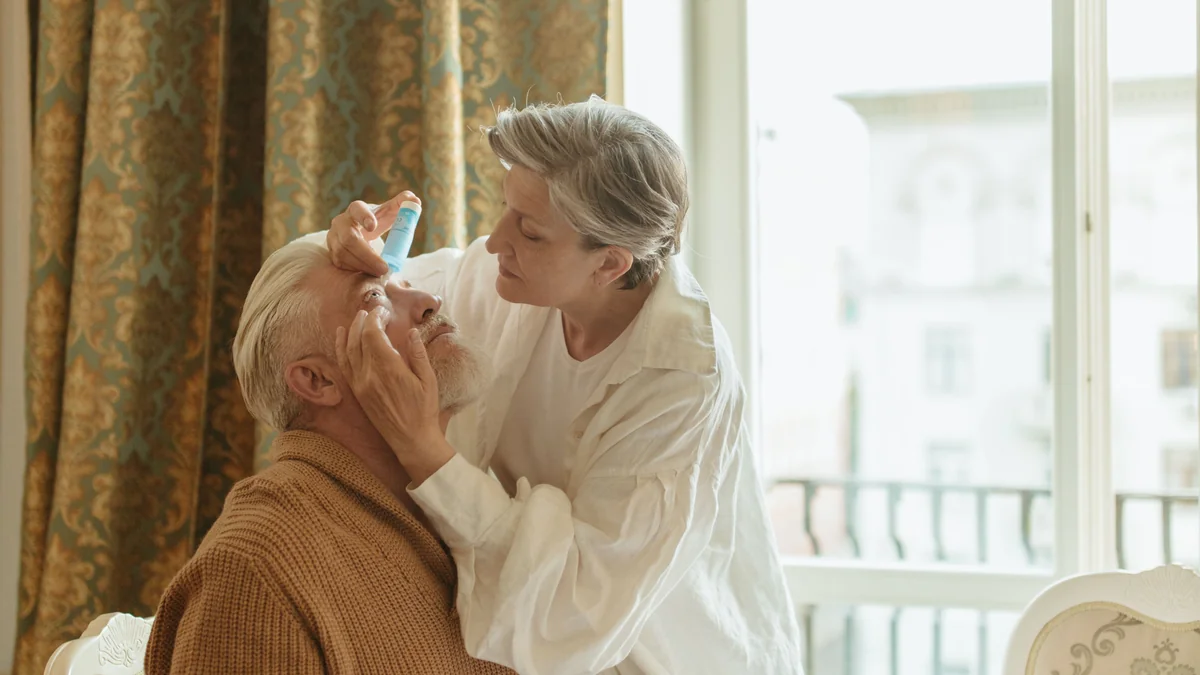
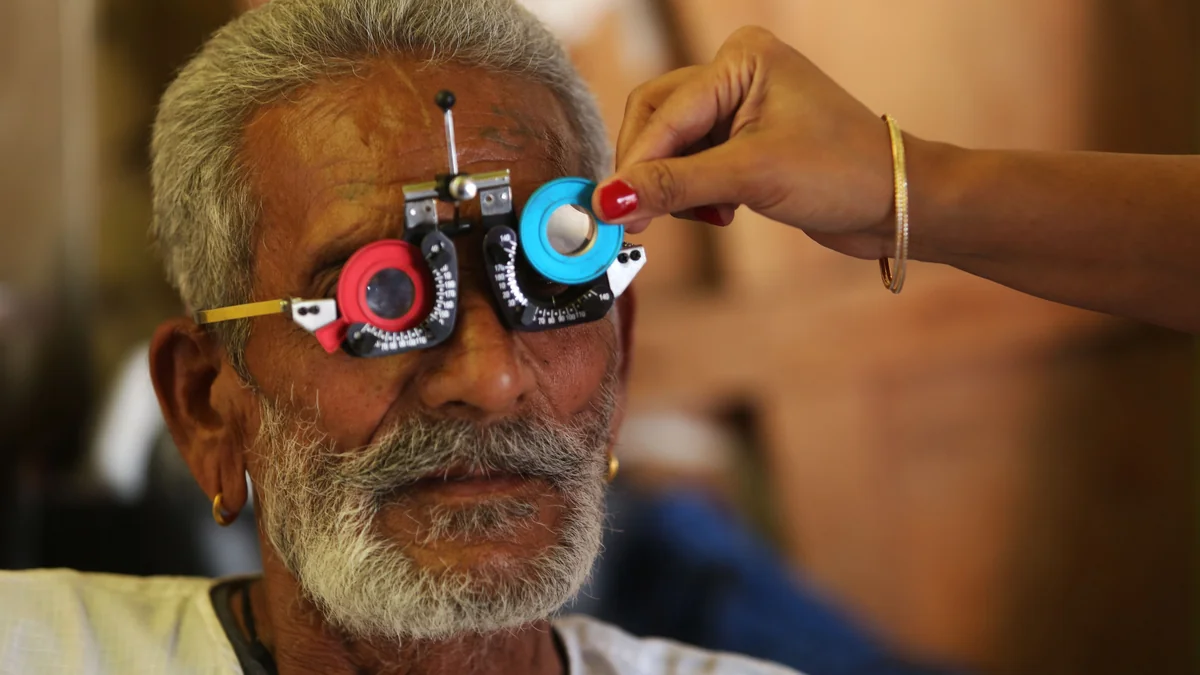
    Eye doctors check for glaucoma as part of a comprehensive dilated eye exam. The NEI describes it as simple and painless: the doctor gives you eye drops to dilate (widen) your pupils, then checks your eyes for glaucoma and other eye problems. The exam includes a visual field test to check your side vision.

    If you’re already seeing an eye doctor for another reason, such as dry eyes, it’s a good moment to ask about your glaucoma risk. Our guide to dry eyes as you get older covers that common condition, which the NEI also says can be checked during a dilated eye exam.

    How glaucoma is treated

    The NEI lists three main types of treatment, chosen by the doctor:

    • Medicines: prescription eye drops are the most common treatment. They lower the pressure in the eye and help prevent damage to the optic nerve.
    • Laser treatment: lasers can help fluid drain out of the eye to lower the pressure. The NEI describes it as a simple procedure done in the doctor’s office.
    • Surgery: if medicines and laser treatment don’t work, the doctor might suggest one of several types of surgery that help fluid drain out of the eye.

    The NEI is clear about what treatment can and can’t do: it won’t undo damage to your vision that has already happened, but it can stop it from getting worse. That is why, for someone diagnosed with glaucoma, the NEI says it’s important to start treatment right away.

    Living with a glaucoma diagnosis

    The NEI calls glaucoma a serious disease but says treatment works well. For people who have it, it suggests:

    • if your doctor prescribes medicine, take it every day;
    • tell your doctor if your treatment causes side effects;
    • see your doctor for regular check-ups;
    • if vision loss makes everyday activities harder, ask your doctor about vision rehabilitation services or devices that could help;
    • encourage family members to get checked, since glaucoma can run in families.

    These are general points, not a treatment plan: decisions about your own care belong with your eye doctor. For a wider look at the health checks that matter as you age, see our brain health hub, which includes a section on hearing and vision checks.

    Frequently asked questions

    What is glaucoma?

    According to the NEI, glaucoma is a group of eye diseases that can cause vision loss and blindness by damaging the optic nerve at the back of the eye.

    Does glaucoma have early symptoms?

    Usually not. The NEI says glaucoma often has no early symptoms, and half of people with glaucoma don’t know they have it.

    Am I at higher risk after 60?

    Yes. The NEI lists being over 60 as a risk factor, especially for Hispanic/Latino people, along with being African American and over 40, or having a family history.

    How often should I have my eyes checked for glaucoma?

    The NEI suggests asking your doctor. For people at higher risk, it recommends a comprehensive dilated eye exam every 1 to 2 years.

    Can glaucoma be cured or prevented?

    The NEI says there’s no cure and no way to prevent it, but early treatment can often stop the damage and protect your vision.

    When is glaucoma an emergency?

    When sudden symptoms appear, such as intense eye pain, nausea, red eye and blurry vision. The NEI says to go to your doctor or an emergency room now.

    Sources

    Photo: Mike Sangma / Pexels (Pexels License)

  • Normal memory loss vs. dementia: what’s part of aging and when to talk to a doctor

    Normal memory loss vs. dementia: what’s part of aging and when to talk to a doctor

    This article is for general information and does not replace advice from a doctor or other qualified health professional. It is not a diagnostic tool: only a health professional can assess memory changes and explain what is causing them.

    Short answer: according to the U.S. National Institute on Aging (NIA), taking longer to learn something new, or occasionally misplacing things or forgetting to pay a bill, is usually a sign of mild, age-related forgetfulness and often a normal part of aging. Dementia is different: the NIA says it is not a normal part of aging, and it interferes with a person’s quality of life and daily activities. Memory problems can also come from other causes, some of them treatable, which is why noticeable changes are worth discussing with a doctor.

    Talk to a doctor if you or someone close to you is:

    • asking the same questions over and over again;
    • getting lost in places you used to know well;
    • having trouble following recipes or directions;
    • becoming more confused about time, people and places;
    • not taking care of yourself, such as eating poorly, not bathing or behaving unsafely.

    These are the signs the NIA lists as reasons to talk with a doctor. The NIA also advises talking with a doctor about any noticeable change in memory, and about memory problems that last more than a few weeks after a stressful period.

    What normal age-related forgetfulness looks like

    The NIA explains that as people grow older, changes occur in all parts of the body, including the brain. Some people notice that they don’t remember information as well as they once did and can’t recall it as quickly. They may occasionally misplace things or forget to pay a bill. According to the NIA, these are usually signs of mild forgetfulness, not a serious memory problem.

    The key word is “occasionally”. In the NIA’s words, “It’s normal to forget things once in a while at any age, but serious memory problems make it hard to do everyday things such as driving, using the phone, and finding the way home.”

    What dementia is

    The NIA is clear: forgetfulness can be a normal part of aging, but dementia is not. It defines dementia as the loss of cognitive functioning (thinking, remembering, learning and reasoning) and of behavioral abilities, to the extent that it interferes with a person’s quality of life and activities.

    Memory loss is common in dementia, but it is not the only sign. The NIA notes that people with dementia may also have problems with language, visual perception or paying attention, and some experience personality changes. There are different types of dementia, including Alzheimer’s disease, Lewy body dementia, frontotemporal dementia and vascular dementia, and symptoms vary from person to person.

    Normal aging vs. dementia: side by side

    The NIA compares some differences between normal aging and the signs of dementia:

    Normal aging Possible sign of dementia
    Making a bad decision once in a while Making poor judgments and decisions a lot of the time
    Missing a monthly payment Problems taking care of monthly bills
    Forgetting which day it is and remembering it later Losing track of the date or time of year
    Sometimes forgetting which word to use Trouble having a conversation
    Losing things from time to time Misplacing things often and being unable to find them

    This table is a way to understand the difference, not a checklist to score yourself or a relative. A single item in the right-hand column does not mean dementia, and memory problems can have many other causes. If something in it sounds familiar, the useful next step is a conversation with a doctor.

    The in-between: mild cognitive impairment

    The NIA describes a condition called mild cognitive impairment (MCI): some older adults have more memory or thinking problems than other people their age, but can usually take care of themselves and carry out day-to-day tasks. MCI may be an early sign of Alzheimer’s disease, but, the NIA stresses, not everyone with MCI will develop Alzheimer’s. If you notice changes in your memory or think you may have MCI, the NIA’s advice is to talk with your doctor.

    Other things that can affect memory

    Memory problems do not always come from aging or dementia. The NIA lists factors that may cause them, including:

    • head injury, such as a concussion;
    • blood clots, tumors or infections in the brain;
    • thyroid, kidney or liver problems;
    • medication side effects;
    • mental health conditions, such as depression and anxiety;
    • alcohol or drug misuse;
    • sleep problems;
    • low levels of important nutrients, such as vitamin B12, or not eating enough healthy foods.

    According to the NIA, problems caused by conditions such as depression or blood clots usually go away once the condition is successfully treated. Major or stressful life events, such as retirement or the death of a spouse, can also leave people confused or forgetful. The NIA says these problems are usually temporary and improve as the stress fades, but if they persist after a few weeks, it is time to talk with a doctor.

    What happens at the doctor’s

    The NIA says a doctor can perform tests and assessments to help determine the source of memory problems, and may recommend seeing a neurologist, a doctor who specializes in diseases of the brain and nervous system. Finding the cause matters, because it guides the treatment plan. The NIA adds that people with memory problems should have a follow-up appointment to check their memory every six to 12 months.

    If you are worried about a parent or partner, you can offer to go with them to the appointment and help them note examples of what has changed.

    Everyday habits the NIA suggests

    For dealing with forgetfulness and staying healthy, the NIA lists tips such as:

    • learn a new skill, and stay involved in activities that help both mind and body;
    • follow a daily routine, use to-do lists, calendars and notes;
    • put your wallet or purse, keys, phone and glasses in the same place each day;
    • spend time with friends and family, or volunteer;
    • get enough sleep, generally seven to eight hours each night;
    • exercise and eat well, prevent or control high blood pressure, and avoid or limit alcohol;
    • get help if you feel depressed for weeks at a time.

    Our brain health hub gathers more of our guides on thinking and memory as you age, and you can find ideas in hobbies to start at any age and in our guide to a steady daily sleep rhythm.

    Be cautious with “memory boosters”

    The NIA warns against pills, supplements, brain training computer games and similar products that promise to improve memory or prevent brain disorders: they “might be unsafe, a waste of money, or both” and could interfere with other treatments. It recommends consulting a doctor before buying them. The NIA also states that there are currently no drugs or lifestyle approaches that can prevent Alzheimer’s or a related dementia, while a generally healthy lifestyle may help reduce the risk of dementia and of many chronic conditions.

    Frequently asked questions

    Is it normal to become more forgetful with age?

    Yes, according to the NIA, mild forgetfulness, such as taking longer to learn new things or occasionally misplacing items, is often a normal part of aging.

    Is dementia a normal part of aging?

    No. The NIA says dementia is not a normal part of aging; it interferes with a person’s quality of life and daily activities.

    What is the difference between normal memory loss and dementia?

    The NIA gives examples: missing a monthly payment can be normal aging, while ongoing problems taking care of monthly bills may be a sign of dementia.

    Can memory problems be caused by something other than dementia?

    Yes. The NIA lists causes such as depression, medication side effects, thyroid problems, sleep problems and low vitamin B12. Some improve once treated.

    When should I talk to a doctor about memory problems?

    When you notice changes in your memory, or signs such as repeating questions or getting lost in familiar places. Only a professional can assess the cause.

    Can supplements or brain games prevent dementia?

    The NIA urges caution: such products may be unsafe or a waste of money, and no drug or lifestyle approach is currently known to prevent Alzheimer’s.

    Sources

    Photo: Antoni Shkraba / Pexels (Pexels License)

  • Dry eyes as you get older: why it happens and what an eye doctor can do

    Dry eyes as you get older: why it happens and what an eye doctor can do

    This article is for general information and does not replace advice from an eye doctor or other qualified health professional. It is not personal medical advice, and only a professional who examines your eyes can say what is causing your symptoms.

    Short answer: dry eye happens when your eyes don’t make enough tears to stay wet, or when your tears don’t work correctly, according to the National Eye Institute (NEI). Being 50 or older is one of the listed risk factors. The NHS also lists being over 50 and adds that many people get dry eyes and that it is not usually serious. We read the NEI page (last updated August 6, 2025) and the NHS page (last reviewed January 6, 2025) on November 23, 2026.

    Talk to an eye doctor if dry eye gets in the way of everyday activities.
    The NEI tells people to let their doctor know if they think they might have dry eye, and if it is getting in the way of everyday activities. The NHS says to see an optician or GP if you still have dry eyes after trying home treatments for a few weeks, or if there is any change in the shape of your eyelids. It lists a painful red eye, or a red eye in a contact lens wearer, as reasons to seek urgent help, and changes to your sight or an eye injury as reasons to contact emergency services. The NHS is a UK source, so local arrangements may differ where you live.

    What dry eye is

    The NEI describes dry eye as happening when your eyes don’t make enough tears to stay wet, or when your tears don’t work correctly. This can make your eyes feel uncomfortable, and in some cases it can also cause vision problems. The NHS puts it in similar terms: you can get dry eyes if you do not make enough tears or your tears dry up quickly.

    The NEI explains that glands above your eyes normally make tears that keep your eyes wet. Dry eye can mean that your glands don’t make enough tears, that your tears dry up too fast, or that your tears just don’t work well enough to keep your eyes wet.

    On how common it is, the NEI says that dry eye is common and affects millions of Americans every year, and its “Did you know?” box cites nearly 16.4 million Americans. The page does not say where that figure comes from, so treat it as the NEI’s own figure.

    Symptoms

    According to the NEI, dry eye can cause:

    • A scratchy feeling, like there’s something in your eye
    • Stinging or burning feelings
    • Red eyes
    • Sensitivity to light
    • Blurry vision

    The NHS list is close: itchy, sore, gritty, red, blurry or sensitive to light. Its list also includes eyes that are more watery than normal.

    Why the risk rises from 50

    The NEI says anyone can get dry eye, but you might be more likely to have it if you:

    • Are age 50 or older
    • Are female
    • Wear contact lenses
    • Don’t get enough vitamin A or omega-3 fatty acids
    • Have certain autoimmune conditions, like lupus or Sjögren syndrome

    The NHS says you may be more likely to get dry eyes if you are over the age of 50, wear contact lenses, or look at computer screens for a long time without a break. Neither page explains in detail why age matters, so we don’t guess at a mechanism here.

    Other things the NHS links to dry eyes

    The NHS lists several everyday factors beyond age:

    • Air conditioned or heated environments
    • Windy, dry or dusty conditions
    • Smoking or time in smoky places, and alcohol
    • Certain medicines, for example some antidepressants or blood pressure medicines
    • Conditions such as blepharitis, Sjögren’s syndrome or lupus

    On medicines, the NHS is clear: do not stop taking a prescribed medicine without getting medical advice first, even if you think it is causing your symptoms. The NEI also says that if a medicine you take for another condition is causing dry eye, your doctor may suggest a different one. That decision belongs to your doctor.

    If you spend winter indoors with the heating on, our article on the daily sleep rhythm covers another everyday habit that can be worth a look, although neither source ties sleep rhythm to dry eye specifically.

    Everyday habits the NEI and NHS describe

    The NEI says your eyes may feel better if you:

    • Try to avoid smoke, wind and air conditioning
    • Use a humidifier to keep the air in your home from getting too dry
    • Limit screen time and take breaks from staring at screens
    • Wear wraparound sunglasses when you’re outside
    • Drink plenty of water, with the NEI suggesting 8 to 10 glasses every day
    • Get enough sleep, about 7 to 8 hours a night

    The NHS adds: clean your eyelids every day, make sure your computer screen is just below eye level, and if you wear contact lenses, take them out and wear glasses to rest your eyes. It describes how to clean eyelids with a flannel soaked in warm (not hot) water. These are general lists from the two organisations, not a plan for you personally. If you have a heart, kidney or other condition, ask your doctor before changing how much you drink.

    How an eye doctor checks for it

    The NEI says your doctor can check for dry eye as part of a comprehensive dilated eye exam, and that it is simple and painless. To find out whether you have dry eye, the doctor might check the amount of tears your eyes make, how long it takes for your tears to dry up, and the structure of your eyelids. The NHS says that if an optician or GP cannot find a cause, they may refer you to an eye specialist (ophthalmologist) for tests.

    Vision and hearing checks are often discussed together, and our page on brain health and everyday checks and our article on tinnitus after 60 cover other sensory changes with the same advice: talk to a professional rather than guess.

    Treatments an eye doctor may discuss

    The NEI says treatment usually depends on what is causing the symptoms. It lists:

    • Over-the-counter eye drops: artificial tears are described as the most common treatment for mild dry eye, with moisturizing gels and ointments also available without a prescription.
    • Prescription medicines: for more serious dry eye, an eye doctor may prescribe eye drops such as cyclosporine or lifitegrast that can help the eyes make more tears.
    • Lifestyle changes: the habits above.
    • Tear duct plugs: small plugs (punctal plugs) placed in the tear ducts to help keep tears in the eyes.
    • Surgery: in some cases, when loose lower eyelids make tears drain too quickly. The NEI says this treatment is not very common.

    The NHS notes that a pharmacist may be able to tell you what you can do yourself and whether anything you can buy might help. We do not recommend any product here. The NEI also says that if another health condition is causing dry eye, treating that condition may improve symptoms, and that you should follow your doctor’s instructions for eye drops.

    Why it is worth taking seriously

    The NEI notes that dry eye can happen if you spend a lot of time looking at a computer, tablet or smartphone, and that if severe dry eye isn’t treated, it can sometimes damage your cornea, the clear outer layer at the front of your eye. The NHS, for its part, says dry eyes are not usually serious. Both statements can be true: most cases are mild, but a persistent or severe case deserves an exam.

    When to see a doctor

    The NEI page does not have a detailed “when to see a doctor” section, so this part relies on the NHS, a UK source.

    • Dry eyes that don’t improve: the NHS says to see an optician or GP if you still have dry eyes after trying home treatments for a few weeks.
    • Change in eyelid shape: the NHS says to see an optician or GP.
    • Painful red eye, or red eye with contact lenses: the NHS says to ask for urgent medical help, as a contact lens wearer with a red eye could have an eye infection.
    • Sudden sight changes, eye injury, severe pain or light hurting your eyes: the NHS lists these as reasons for emergency help. Contact emergency services or your local urgent medical service.
    • Everyday activities affected: the NEI says to tell your doctor.

    Frequently asked questions

    What is dry eye?

    According to the NEI, it happens when your eyes don’t make enough tears to stay wet, or when your tears don’t work correctly.

    Is dry eye more common as you get older?

    The NEI and the NHS both list being aged 50 or older (over 50 for the NHS) as a factor that can make dry eye more likely.

    What are the symptoms of dry eye?

    The NEI lists a scratchy feeling, stinging or burning, red eyes, sensitivity to light and blurry vision.

    Can everyday habits help?

    The NEI suggests avoiding smoke, wind and air conditioning, using a humidifier, taking breaks from screens and getting enough sleep. The NHS adds daily eyelid cleaning.

    Can my medicines cause dry eyes?

    The NHS lists certain medicines as a possible factor. Do not stop a prescribed medicine without medical advice.

    When should I see an eye doctor?

    If dry eye gets in the way of everyday activities (NEI), or if it continues after a few weeks of home treatment (NHS). Seek urgent help for a painful red eye or sudden sight changes.

    Sources

    Sources read on November 23, 2026. This article does not replace advice from a doctor.

    Photo: Yaroslav Shuraev / Pexels (Pexels License)

  • Orthostatic hypotension in older adults: dizziness on standing, causes and when to see a doctor

    Orthostatic hypotension in older adults: dizziness on standing, causes and when to see a doctor

    This article is for general information and does not replace advice from a doctor or other qualified health professional. It is not personal medical advice, and only a health professional can say what is causing your dizziness or what might help.

    Short answer: orthostatic hypotension, also called postural hypotension, is a form of low blood pressure that happens when you stand up after sitting or lying down. According to the Mayo Clinic, it can cause dizziness or lightheadedness and possibly fainting, and it is common in people aged 65 and older. The NHS says that if you get symptoms when you stand up or suddenly change position, you may have this type of low blood pressure. We read the NHS page (last reviewed 11 July 2023) and the Mayo Clinic page (May 26, 2022) on November 23, 2026.

    See a doctor if you faint, fall or lose consciousness.
    Mayo Clinic says that losing consciousness, even for just a few seconds, is serious and requires seeing a provider right away. It also lists falls after fainting as a common complication in older adults. If someone has lost consciousness or has been hurt in a fall, contact emergency services or your local urgent medical service (our wording, not a quote from the sources). The NHS also advises seeing a GP if you keep getting symptoms such as dizziness and fainting.

    What happens in the body

    Mayo Clinic explains that when you stand up from sitting or lying, gravity causes blood to collect in the legs and belly. Blood pressure drops because less blood flows back to the heart. Usually, special cells called baroreceptors, near the heart and neck arteries, sense this and signal the brain, which tells the heart to beat faster and the blood vessels to narrow. Orthostatic hypotension occurs when something interrupts that process.

    The NHS defines low blood pressure as a reading of less than 90/60mmHg, and notes that it does not always cause symptoms.

    Common symptoms

    Mayo Clinic says the most common symptom is lightheadedness or dizziness when standing after sitting or lying down, and that symptoms usually last less than a few minutes. Other signs it lists:

    • blurry vision
    • weakness
    • fainting (syncope)
    • confusion

    The NHS lists a very similar set: lightheadedness or dizziness, feeling sick, blurred vision, generally feeling weak, confusion and fainting.

    Why it is more common as we get older

    Mayo Clinic gives age as a risk factor: orthostatic hypotension is common in people 65 and older. The baroreceptors that help control blood pressure can slow with age, and it can be harder for an aging heart to speed up to make up for drops in blood pressure. The NHS adds that some people develop low blood pressure as they get older. Mayo Clinic also notes that low blood pressure after meals, called postprandial hypotension, is more common in older adults.

    Possible causes and risk factors

    Mayo Clinic describes occasional orthostatic hypotension as usually caused by something obvious, such as dehydration or lengthy bed rest, and chronic orthostatic hypotension as usually a sign of another health problem. The causes and risk factors it lists include:

    • Dehydration: fever, vomiting, not drinking enough fluids, severe diarrhea, or heavy sweating with strenuous exercise.
    • Heart problems: for example a very low heart rate, heart valve problems, heart attack or heart failure.
    • Endocrine problems: thyroid conditions, adrenal insufficiency and low blood sugar, and diabetes, which can damage the nerves that help control blood pressure.
    • Nervous system disorders: such as Parkinson’s disease, Lewy body dementia and others.
    • Heat, bed rest and alcohol: a hot environment, staying in bed for a long time, and drinking alcohol can each raise the risk.
    • Medicines: both Mayo Clinic and the NHS list some medicines as a possible cause. Mayo Clinic names, among others, medicines used for high blood pressure or heart disease. Only the doctor or pharmacist who knows your full list of medicines can say whether one of them matters in your case, so bring up any concern with them.

    Why falls matter

    Mayo Clinic states that persistent orthostatic hypotension can cause serious complications, especially in older adults: falls after fainting, a possible increase in stroke risk because of the swings in blood pressure, and a possible risk factor for cardiovascular diseases and complications such as chest pain, heart failure or heart rhythm problems. If you are working on staying steady on your feet, see our guides on muscle strength and the 30-second chair stand test.

    Everyday habits the NHS suggests

    The NHS lists things people can do to help with symptoms of low blood pressure:

    • get up slowly from sitting to standing;
    • take care when getting out of bed: move slowly from lying to sitting to standing;
    • eat small, frequent meals, and lying down or sitting still for a while after eating may also help;
    • increase the amount of water you drink.

    And things to avoid: sitting or standing for long periods, bending down or changing posture suddenly, and drinking too much alcohol. These are general lists from the NHS, not a plan for you personally. If you have a heart, kidney or other condition, ask your doctor what is right for you before changing how much you drink.

    How it is checked and what a doctor may do

    The NHS says you can have your blood pressure checked by a pharmacist, a practice nurse or a GP, or at home with a home blood pressure monitor. It says that if a cause is found, a GP can recommend treatment to ease symptoms, and that medicine to increase blood pressure is rarely needed because simple lifestyle measures or treating the underlying cause is usually effective. Decisions about any medicine belong with your doctor.

    Mayo Clinic suggests keeping a record of your symptoms, when they occurred, how long they lasted and what you were doing at the time, and telling your care provider if symptoms occur at times that could be dangerous, such as while driving.

    When to see a doctor

    • If you faint, fall or lose consciousness: see a doctor; Mayo Clinic says losing consciousness requires seeing a provider right away. Use emergency services if someone is unconscious or badly hurt.
    • If symptoms keep coming back: both the NHS and Mayo Clinic advise seeing a GP or health care provider for frequent symptoms such as dizziness when standing.
    • If symptoms appear at risky moments, such as while driving, tell your care provider (Mayo Clinic).
    • Occasional, brief lightheadedness is, according to Mayo Clinic, likely no cause for concern.

    Frequently asked questions

    What is orthostatic hypotension?

    It is a form of low blood pressure that happens when standing after sitting or lying down, according to Mayo Clinic.

    What are the symptoms of postural hypotension?

    Dizziness or lightheadedness on standing, blurry vision, weakness, fainting and confusion, according to Mayo Clinic and the NHS.

    How long do the symptoms last?

    Mayo Clinic says symptoms usually last less than a few minutes.

    Is orthostatic hypotension more common in older adults?

    Mayo Clinic says it is common in people aged 65 and older.

    Can medicines cause it?

    The NHS and Mayo Clinic both list some medicines as a possible cause. Ask your doctor or pharmacist about your own medicines.

    When should I see a doctor?

    If you faint, fall or lose consciousness, or if symptoms keep happening. Mayo Clinic says losing consciousness requires seeing a provider right away.

    Sources

    Sources read on November 23, 2026. This article does not replace advice from a doctor.

    Photo: Mikhail Nilov / Pexels (Pexels License)

  • Urinary incontinence in older adults: causes, pelvic floor exercises and when to see a doctor

    Urinary incontinence in older adults: causes, pelvic floor exercises and when to see a doctor

    This article is for general information and does not replace advice from a doctor or other qualified health professional. It is not personal medical advice, and only a health professional can say what is behind bladder leaks or which treatment fits you.

    Short answer: urinary incontinence means a person leaks urine by accident. The U.S. National Institute on Aging (NIA) says it is more common in older people, especially women, and that it “can often be stopped or controlled”. For treatment, the NIA says the simplest and safest options should be tried first, such as bladder control training and pelvic floor (Kegel) exercises. We read the NIA page (content reviewed January 24, 2022) and the NIDDK page on Kegel exercises (last reviewed November 2021) on November 22, 2026.

    What urinary incontinence is

    According to the NIA, bladder control issues can be embarrassing and cause people to avoid their normal activities. During urination, muscles in the bladder tighten while the muscles around the urethra relax. When the muscles in and around the bladder do not work the way they should, urine can leak.

    Why it happens

    The NIA says incontinence can happen for many reasons, including urinary tract infections, vaginal infection or irritation, or constipation, and that some medications can cause bladder control problems that last a short time. When it lasts longer, the NIA lists:

    • weak bladder or pelvic floor muscles;
    • overactive bladder muscles;
    • damage to the nerves that control the bladder, from diseases such as multiple sclerosis, diabetes or Parkinson’s disease;
    • diseases such as arthritis that may make it difficult to get to the bathroom in time;
    • pelvic organ prolapse, when pelvic organs shift out of their normal place.

    In men, the NIA says most incontinence is related to the prostate gland, for example prostatitis, nerve or muscle damage from surgery, or an enlarged prostate.

    Types of urinary incontinence

    The NIA describes four types:

    • Stress incontinence: urine leaks when pressure is put on the bladder, such as during exercise, coughing, sneezing, laughing or lifting heavy objects.
    • Urge incontinence: a sudden need to urinate, without being able to hold urine long enough to reach the toilet.
    • Overflow incontinence: small amounts of urine leak from a bladder that is always full.
    • Functional incontinence: normal bladder control, but difficulty getting to the toilet because of arthritis or other disorders that make it hard to move quickly.

    First-line approaches described by the NIA

    The NIA says treatment depends on the type of problem, how serious it is and what fits your lifestyle, and that as a general rule the simplest and safest treatments should be tried first. A combination may help. Your doctor may suggest:

    • Pelvic muscle exercises (Kegel exercises), which strengthen the muscles that support the bladder and can help you hold urine and avoid leaks;
    • Urgency suppression: for example distracting yourself, taking long relaxing breaths, holding still and squeezing the pelvic floor muscles;
    • Timed voiding: scheduling toilet visits, for example every hour, then slowly extending the time between breaks.

    The NIA also lists lifestyle changes that may help with some bladder problems: losing weight, quitting smoking, saying no to alcohol, choosing water over other drinks, limiting drinks before bedtime, preventing constipation and avoiding lifting heavy objects. For general pages on this site about fiber, strength and movement, see fiber step by step, muscle strength and light daily movement.

    Pelvic floor exercises: what NIDDK describes

    The NIDDK explains that Kegel exercises, also called pelvic floor muscle training, strengthen the muscles that support the bladder, rectum and uterus, and can help both women and men. It also warns that in some cases practicing them may not be a good option: check with your health care professional before you begin. Its beginner method is to find and squeeze the pelvic floor muscles, try to hold for 3 seconds, release and fully relax, and work up to 10 to 15 repetitions per session, in different positions.

    The NIDDK adds several cautions:

    • many people have trouble finding the right muscles, and a doctor, nurse or pelvic floor therapist can check that you are doing the exercises correctly;
    • do not tighten your stomach or thighs, because squeezing the wrong muscles can put more pressure on the bladder;
    • stopping urine midstream can help find the muscles at first, but should not be done regularly, because not emptying the bladder completely could increase the risk of a bladder infection;
    • it says you may not feel an improvement until after 3 to 6 weeks, and not to overdo it, which can lead to straining.

    The NIDDK says that the number of seconds and repetitions can vary, and that you should ask your health care professional for a plan that meets your needs. This article does not give a personal exercise plan.

    Medicines and other medical options

    The NIA says medications in pill, liquid or patch form may be prescribed for bladder control problems. It adds a caution: some medications for overactive bladder have been associated with a higher risk of cognitive decline in adults over age 65, so talk with your doctor about what medications, if any, would work best for you. It also lists vaginal estrogen cream, bulking agents, medical devices, biofeedback, electrical nerve stimulation and surgery in some cases. These are decisions for a doctor.

    When to talk to a health care provider

    The NIA says to talk to your health care provider if you have urinary incontinence or any signs of a bladder problem, such as:

    • needing to urinate more frequently or suddenly;
    • cloudy urine;
    • blood in the urine;
    • pain while urinating;
    • urinating eight or more times in one day;
    • passing only small amounts of urine after strong urges to urinate;
    • trouble starting or a weak stream.

    The page says your doctor may take your medical history, ask about your symptoms and medications, take urine and blood samples, and possibly ask you to keep a diary of when you urinate and leak. Your primary care doctor may also send you to a urologist. The NIA page does not describe emergency warning signs, so if you feel very unwell or have severe pain, contact a health professional or your local emergency number.

    Frequently asked questions

    What is urinary incontinence?

    The NIA defines it as a person leaking urine by accident. It is more common in older people, especially women, but the NIA says it can often be stopped or controlled.

    What are the main types of incontinence?

    The NIA lists stress, urge, overflow and functional incontinence.

    Do pelvic floor exercises help with leaks?

    The NIA lists pelvic muscle (Kegel) exercises among the simplest treatments to try first, and the NIDDK says they strengthen the muscles that support the bladder. Check with a health care professional first, because in some cases they may not be a good option.

    How long do Kegel exercises take to work?

    The NIDDK says you may not feel your bladder control improve until after 3 to 6 weeks.

    Can medicines for overactive bladder cause problems?

    The NIA says some medications for overactive bladder have been associated with a higher risk of cognitive decline in adults over age 65, and advises talking with your doctor about which medications, if any, are right for you.

    When should I see a doctor about bladder leaks?

    The NIA says to talk to a health care provider if you have urinary incontinence or signs such as blood in the urine, cloudy urine, pain when urinating, or urinating eight or more times in a day.

    Sources

    Sources read on November 22, 2026. Check the current NIA and NIDDK pages and ask a health professional about your own situation.

    Photo: Mikhail Nilov / Pexels (Pexels License)

  • Tinnitus after 60: causes, who to see and when to see a doctor

    Tinnitus after 60: causes, who to see and when to see a doctor

    This article is for general information and does not replace advice from a doctor or other qualified health professional. It is not personal medical advice, and only a health professional can say what is causing your tinnitus or what might help.

    Short answer: tinnitus is the perception of a sound with no outside source, often described as ringing. According to the U.S. National Institute on Deafness and Other Communication Disorders (NIDCD), surveys estimate that 10 to 25% of adults have it, most people who have it have some degree of hearing loss, and it is only rarely associated with a serious medical problem. There is no cure, but there are ways to reduce symptoms. We read the NIDCD page (last updated May 1, 2023) and the UK National Health Service (NHS) page on November 22, 2026.

    What tinnitus is

    NIDCD defines tinnitus as the perception of sound that does not have an external source, so other people cannot hear it. It is commonly described as ringing, but some people hear roaring or buzzing. The NIDCD lists other sounds too: whistling, humming, clicking, hissing or squealing. The sound may be soft or loud, low or high pitched, and it may come and go or be present all the time.

    Most cases are subjective, meaning that only you can hear the sounds. In rare cases, the sound pulsates rhythmically, often in time to your heartbeat. NIDCD notes that a doctor may then be able to hear it with a stethoscope.

    How common is it, and does it go away?

    NIDCD says surveys estimate that 10 to 25% of adults have tinnitus. It also says that, for children and adults, tinnitus may improve or even go away over time, but in some cases it worsens with time. When it lasts for three months or longer, it is considered chronic.

    The page does not give figures specific to people over 60. It does say that hearing loss, which can be caused by factors such as aging or exposure to loud noise, is strongly associated with tinnitus. Some people with hearing loss, however, never develop tinnitus.

    Common causes

    NIDCD says the exact causes are not fully understood, and lists several links:

    • Noise exposure, for example at work, at a sporting event or at a concert.
    • Hearing loss, strongly associated with tinnitus.
    • Medications. Tinnitus can be a side effect of certain medications, especially at high doses. NIDCD names non-steroidal anti-inflammatory drugs (ibuprofen, naproxen, aspirin), certain antibiotics, anti-cancer drugs, anti-malaria medications and antidepressants.
    • Earwax or an ear infection, which can block the ear canal.
    • Head or neck injuries.

    Less common causes

    NIDCD also lists Ménière’s disease, jaw joint problems (clenching or tooth grinding), tumor-related disorders such as a benign vestibular schwannoma, blood vessel problems (including high blood pressure and atherosclerosis) and chronic conditions such as diabetes, migraines, thyroid disorders, anemia, lupus and multiple sclerosis. It adds that some people develop tinnitus for no known reason. The NHS likewise says that it is not always clear what causes tinnitus.

    When to see a doctor

    NIDCD advises that if you have tinnitus, you should first see your primary care doctor, who will check for earwax or fluid from an ear infection and ask about your medical history, including medications. The NHS gives more detailed guidance for the UK:

    • See a GP if you have tinnitus regularly or constantly, if it is getting worse, or if it is bothering you, for example affecting your sleep or concentration or making you feel anxious or depressed.
    • Ask for an urgent GP appointment if you have tinnitus that beats in time with your pulse.
    • Go to A&E or call 999 (UK emergency services) if you have tinnitus after a head injury, or tinnitus together with sudden hearing loss, weakness in the muscles of your face, or a spinning sensation (vertigo). In other countries, use your local emergency number.

    This is general information from two public health bodies, not a way to decide for yourself whether your symptoms are serious. If you are worried, contact a health professional.

    Who you might see

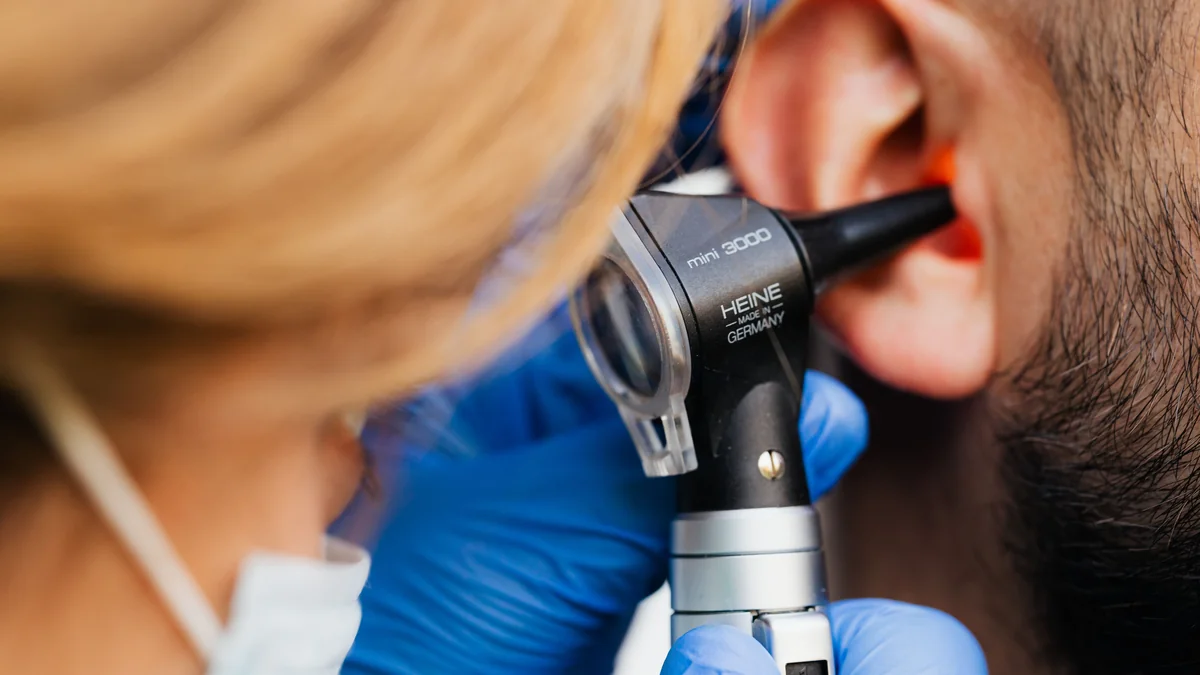
    After the primary care visit, NIDCD says you may be referred to an otolaryngologist (an ear, nose and throat doctor, or ENT), who will ask about the sounds and when they started and examine your head, neck and ears. You might also see an audiologist, who can measure your hearing and evaluate your tinnitus. The ENT may order imaging tests, especially if the tinnitus pulsates.

    What can help, according to NIDCD

    When tinnitus has an underlying physiological cause, such as earwax or jaw joint problems, NIDCD says addressing the cause can eliminate or greatly reduce symptoms. For many people, symptoms can persist for months or even years, and several approaches can lessen the impact:

    • Sound therapy. Tabletop or smartphone sound generators are typically used as an aid for relaxation or sleep. Hearing aids are one of the main treatment options for people with tinnitus who have hearing loss.
    • Behavioral therapy. Counseling can help reduce the impact of tinnitus on your life. Cognitive behavioral therapy teaches you to identify negative thoughts that cause distress, and NIDCD says studies have shown it can help improve well-being. Tinnitus retraining therapy combines counseling and sound therapy.
    • Medications. There are no medications specifically for treating tinnitus, but a doctor may prescribe antidepressants or anti-anxiety medications to improve mood or sleep.

    The NHS adds everyday suggestions: relaxing, working on sleep habits such as a bedtime routine, avoiding things that can make tinnitus worse (stress or loud background noise), and not having total silence, since soft music or sounds may distract you. It also says that hobbies and activities may take your mind off it. For related pages on this site, see hearing and other health checks, sleep and the rhythm of the day and hobbies to start at any age.

    Supplements: what NIDCD says

    NIDCD says that while certain vitamins, herbal extracts and dietary supplements are commonly advertised as cures for tinnitus, “none of these has been proven to be effective”. Talk to a health professional before taking any product for tinnitus.

    Frequently asked questions

    What is tinnitus?

    According to NIDCD, it is the perception of sound that does not have an external source, so other people cannot hear it. It is commonly described as ringing, but can also be roaring, buzzing or other sounds.

    Is tinnitus common after 60?

    NIDCD says surveys estimate that 10 to 25% of adults have tinnitus and that hearing loss, which can be caused by aging, is strongly associated with it. The page gives no figure specific to people over 60.

    Does tinnitus mean something serious?

    NIDCD says tinnitus is only rarely associated with a serious medical problem and is usually not severe enough to interfere with daily life. The NHS lists situations that need urgent or emergency care, described above.

    Can tinnitus be cured?

    NIDCD says there is currently no cure for tinnitus, but there are ways to reduce symptoms, such as sound therapy devices (including hearing aids), behavioral therapies and medications.

    Do supplements help tinnitus?

    NIDCD says none of the vitamins, herbal extracts or dietary supplements commonly advertised as cures has been proven to be effective.

    Who should I see first about tinnitus?

    NIDCD advises seeing your primary care doctor first, who may refer you to an ENT doctor or an audiologist.

    Sources

    • National Institute on Deafness and Other Communication Disorders (NIDCD), “What Is Tinnitus? — Causes and Treatment” (publication no. 10-4896, February 2023; last updated May 1, 2023), read on November 22, 2026: https://www.nidcd.nih.gov/health/tinnitus
    • NHS (United Kingdom), “Tinnitus” (no review date shown on the text we read), read on November 22, 2026: https://www.nhs.uk/conditions/tinnitus/

    Sources read on November 22, 2026. Check the current NIDCD and NHS pages and ask a health professional about your own situation.

    Photo: kaboompics / Pexels (Pexels License)

  • Hobbies to start at any age: ideas for home and nearby

    Hobbies to start at any age: ideas for home and nearby

    Author: The Aging Effect editorial team
    Editorial review: Claims and sources checked on 14 November 2026 (Europe/Paris) against the official pages listed below. No named clinician is claimed as a reviewer.
    Last reviewed: 14 November 2026

    This article is for general information and does not replace advice from a doctor or other qualified health professional. If you notice changes in memory or mood, talk with a health professional.

    Short answer: good hobbies for seniors are the ones you enjoy and can keep doing: a class at the library or community college, a hobby group (knitting, birdwatching, painting, wood carving), a choir, volunteering, or teaching a skill you already have. The National Institute on Aging (NIA) says that engaging in social and productive activities you enjoy “may help to maintain your well-being and independence as you age,” and advises starting with one or two activities. The Aging Effect sorts the ideas below by place and effort.

    Why hobbies matter as we age

    The NIA notes that as we grow older, we may spend more time at home alone, and that being lonely or socially isolated is not good for overall health. Its suggestion: try activities you find meaningful.

    The NIA reports that research has described older adults with an active lifestyle as, among other things, happier and less depressed, and better prepared to cope. On the same page, the studies it cites on mood say that older adults who take part in activities they find meaningful “say they feel happier and healthier.” Choose activities because you like them; that is reason enough.

    What the research does not promise

    It is important to keep this in proportion. On cognitive health, the NIA writes that “evidence for a lasting beneficial cognitive effect of these types of activities is not definitive.” It also warns: “Beware of claims that playing certain computer and online games can improve your memory and thinking.”

    So we do not present any hobby as a way to prevent memory loss or dementia. One study cited by the NIA found that older adults who learned quilting or digital photography had more memory improvement than those who only socialized or did less demanding activities — an encouraging finding, not a guarantee.

    Ideas you can start at home

    Many of the NIA’s suggestions can be done alone or from a distance, using a phone or computer:

    • Learn something online. The NIA notes you may be able to find classes online — a language, cooking, or computer skills.
    • Make something with your hands. Knitting, painting, wood carving, embroidery, calligraphy, building models or quilting all appear in the NIA’s lists.
    • Puzzles and word games. Enjoyable for many people; see our Brain hub. We do not claim they “train” memory.
    • Reconnect. The NIA suggests getting back in touch with old friends, for example through a high school or college alumni association.
    • Play with grandchildren. Teach them a game or dance you remember from childhood, another idea from the NIA.

    Ideas nearby: classes, clubs and volunteering

    • Classes: the NIA suggests contacting your local community college or library; many offer free or discounted courses for older adults.
    • Museums: many offer free group tours and educational programs, the NIA notes. That is general U.S. guidance from the NIA, not a promise about any particular museum.
    • Senior or community centers: events and activities close to home.
    • Hobby groups: knitting, hiking, birdwatching, painting or wood carving clubs.
    • Music: sing in a community choir, or play in a local band or orchestra.
    • Sports clubs for older adults: the NIA mentions bowling or bocce.
    • Volunteering: at a school, library, museum, hospital or animal shelter; serving meals or organizing clothing donations; running errands for people with limited mobility.
    • Teaching: pass on a skill — photography, chess, baking, woodworking — to a new generation.

    How to start without overdoing it

    The NIA’s advice is simple: “You might start by adding one or two activities to your routine and see how you feel. You can always add more.” It adds that activities you enjoy “should be fun, not stressful.”

    A few practical cues:

    1. Pick by energy, not by obligation. One quiet hobby at home and one outing a week is a reasonable start.
    2. Mix mind, body and people. The NIA reports that variety may matter; a walking group, for instance, combines movement and company. Our weekly exercise schedule for seniors can help you fit in active hobbies.
    3. Check access. Ask about transportation, step-free access and costs before joining.
    4. Give it a few weeks. If it is not fun, try something else.

    When to talk with a doctor

    Hobbies are not a substitute for care. If you or someone close to you notices memory changes that affect daily life, or persistent low mood, talk with a health professional. Our Brain hub has a section on everyday forgetfulness and when to mention it to a doctor, and another on sleep and the rhythm of the day.

    Frequently asked questions

    What are good hobbies for seniors at home?

    Ideas from the National Institute on Aging include taking a class online, crafts such as knitting, painting, embroidery or quilting, reconnecting with old friends, and teaching a game or skill to grandchildren.

    Can hobbies prevent memory loss?

    No hobby can be promised to prevent memory loss. The NIA says research is encouraging but that evidence for a lasting cognitive benefit from such activities is not definitive.

    Do brain-training apps work?

    The NIA warns to beware of claims that certain computer and online games can improve memory and thinking, saying there is not enough evidence that commercial brain-training apps have the same effect as research training programs.

    How many activities should I start with?

    The NIA suggests starting by adding one or two activities to your routine and seeing how you feel. You can always add more, and activities should be fun, not stressful.

    Where can older adults find low-cost classes?

    The NIA suggests your local community college or library, many of which offer free or discounted courses for older adults, as well as museums and community or senior centers.

    Sources

    • National Institute on Aging, “Participating in Activities You Enjoy As You Age”: https://www.nia.nih.gov/health/healthy-aging/participating-activities-you-enjoy-you-age (content reviewed March 28, 2022; opened 14/11/2026)
    • National Institute on Aging, “Cognitive Health and Older Adults”: https://www.nia.nih.gov/health/brain-health/cognitive-health-and-older-adults (content reviewed June 11, 2024; opened 14/11/2026)

    Sources opened on 14 November 2026 (Europe/Paris). No product, app or class has been tested by The Aging Effect.

    Related: Brain hub

    Photo: cottonbro studio / Pexels (Pexels License)

  • Osteoporosis screening: who needs a bone density test and when (USPSTF 2025)

    Osteoporosis screening: who needs a bone density test and when (USPSTF 2025)

    This article is for general information and does not replace advice from a doctor or other qualified health professional. It is not personal medical advice, and only a health professional can say whether a bone density test is right for you.

    Short answer: in its recommendation dated January 14, 2025, the U.S. Preventive Services Task Force (USPSTF) recommends screening for osteoporosis in women 65 years or older (Grade B) and in postmenopausal women younger than 65 who are at increased risk of fracture (Grade B). For men, it concludes that the current evidence is insufficient to assess the balance of benefits and harms of screening (an ‘I statement’). The most commonly used screening test is a bone density scan called DXA. We read the USPSTF page on November 21, 2026.

    What the USPSTF recommends

    The USPSTF’s recommendation summary has three lines:

    Population Recommendation Grade
    Women 65 years or older Screen for osteoporosis to prevent osteoporotic fractures B
    Postmenopausal women younger than 65 years with 1 or more risk factors for osteoporosis Screen if at increased risk of fracture, as estimated by clinical risk assessment B
    Men Current evidence is insufficient to assess the balance of benefits and harms of screening I

    Source: USPSTF, “Osteoporosis to Prevent Fractures: Screening” (https://www.uspreventiveservicestaskforce.org/uspstf/recommendation/osteoporosis-screening), dated January 14, 2025, read on November 21, 2026.

    The USPSTF states that its recommendations are independent of the U.S. government and should not be construed as an official position of the Agency for Healthcare Research and Quality or the U.S. Department of Health and Human Services.

    Who the recommendation applies to

    According to the USPSTF, the recommendations apply to adults 40 years or older without known osteoporosis or a history of fragility fractures. They do not apply to people with secondary osteoporosis due to an underlying medical condition (for example cancer, metabolic bone diseases or hyperthyroidism) or to chronic use of a medication associated with bone loss (for example glucocorticoids).

    The USPSTF explains that fragility fractures, also called ‘low-energy’ or ‘low-trauma’ fractures, are fractures sustained from a fall from standing height or lower that would not cause a fracture in most healthy persons.

    Women 65 and older, and younger postmenopausal women

    For women 65 years or older, the USPSTF says to screen with a DXA bone mineral density (BMD) test, with or without fracture risk assessment.

    For postmenopausal women younger than 65, the USPSTF suggests a two-step approach. A clinician first checks for risk factors for osteoporosis and fracture. The USPSTF lists menopausal status, low body weight, parental history of hip fracture, cigarette smoking and excess alcohol consumption. If a woman has one or more risk factors in addition to postmenopausal status, the clinician then uses a clinical risk assessment tool to estimate risk and help decide whether screening is warranted. The USPSTF names FRAX, the Fracture Risk Calculator and the Garvan Fracture Risk Calculator as examples of such tools. For women assessed to be at increased risk, it says to screen with DXA BMD, with or without fracture risk assessment.

    The USPSTF also says that other medical conditions and medications (for example corticosteroids or diabetes treated with insulin) may increase the risk of osteoporosis and fragility fractures.

    Men: what “insufficient evidence” means

    The USPSTF’s ‘I statement’ for men means that the evidence is insufficient to assess the balance of benefits and harms. The USPSTF says there is insufficient evidence to recommend for or against screening in men, and that more research is needed.

    The USPSTF notes that men have similar risk factors for fragility fractures as women, including increasing age, low BMI, excessive alcohol intake, current smoking, chronic corticosteroid use, history of prior fractures, history of falls within the past year, hypogonadism, history of cerebrovascular accident and history of diabetes. It adds that osteoporosis and fragility fractures are more common in women than men, but that excess mortality related to them is greater in men. Whether a man should discuss a bone density test is a question for his doctor.

    The test: DXA

    According to the USPSTF, the most commonly used bone measurement test to screen for osteoporosis is dual-energy x-ray absorptiometry (DXA) at a central site, such as the total hip, femoral neck or lumbar spine. It says that centrally measured DXA correlates with bone strength and clinical fracture outcomes and uses low doses of radiation.

    The USPSTF recalls that in 1994 the World Health Organization defined osteoporosis in postmenopausal White women as bone density at the hip or lumbar spine that is 2.5 standard deviations or lower (T score of −2.5 or lower) than the mean BMD for a reference population of young healthy White women, and that this became the reference standard for people of all racial and ethnic groups and for men and women.

    How often?

    The USPSTF does not give a fixed interval in its recommendation summary. In its discussion of screening intervals, it says that cohort studies suggest that repeating BMD testing at an interval of 4 to 8 years does not result in additional accuracy in predicting fractures. It also lists, among research needs, decision analysis studies to inform the optimal start and stop ages and screening interval in women. How often you are tested is therefore something to ask your health professional.

    Why it matters: the numbers

    The USPSTF says osteoporotic fractures are associated with psychological distress, subsequent fractures, loss of independence, reduced ability to perform activities of daily living, and death. It reports that only 40% to 60% of people who have a hip fracture recover their prefracture level of mobility and ability to perform activities of daily living. The age-adjusted prevalence of osteoporosis among community-dwelling U.S. residents 50 years or older is 12.6%, and it is higher among people 65 years or older (27.1% in women and 5.7% in men).

    For related reading on movement and falls, see our pages on muscle strength and the 30-second chair stand test, and on vitamin D in winter. They do not replace a medical assessment.

    When to talk to a health professional

    Box: when to talk to a health professional

    • If you are a woman 65 or older, or a postmenopausal woman younger than 65 with risk factors: ask whether and when a bone density test is appropriate for you.
    • If you are a man: the USPSTF says evidence is insufficient to recommend for or against screening, so this is a conversation to have with your doctor, especially if you have risk factors.
    • If you have had a fracture from a fall from standing height or lower, or if you take a medication such as a glucocorticoid for a long time: the USPSTF recommendation is written for adults without known osteoporosis or a history of fragility fractures and does not cover secondary osteoporosis, so ask your health professional about your own situation.
    • After a fall with injury or sudden severe pain: seek medical care; call your local emergency number (911 in the United States) in an emergency.

    Frequently asked questions

    At what age should women have a bone density test, according to the USPSTF?

    The USPSTF recommends screening for osteoporosis in women 65 years or older, and in postmenopausal women younger than 65 who are at increased risk of fracture as estimated by clinical risk assessment.

    Should men be screened for osteoporosis?

    The USPSTF concludes that the current evidence is insufficient to assess the balance of benefits and harms of screening in men. This is an ‘I statement’: it is neither a recommendation for nor against.

    What test does the USPSTF mention for osteoporosis screening?

    DXA, a dual-energy x-ray absorptiometry bone mineral density test at a central site such as the hip or lumbar spine, with or without fracture risk assessment.

    How often should you repeat a bone density test?

    The USPSTF does not give a fixed interval. It notes that cohort studies suggest repeating BMD testing at an interval of 4 to 8 years does not result in additional accuracy in predicting fractures, and lists optimal intervals as a research need.

    Does the recommendation apply to everyone?

    No. It applies to adults 40 years or older without known osteoporosis or a history of fragility fractures, and not to secondary osteoporosis or chronic use of medications associated with bone loss.

    Sources

    Source read on November 21, 2026. Check the current USPSTF page and ask a health professional about your own situation.

    Photo: Cedric Fauntleroy / Pexels (Pexels License)

  • Hypothermia in older adults: warning signs and a safe indoor temperature

    Hypothermia in older adults: warning signs and a safe indoor temperature

    This article is for general information and does not replace advice from a doctor, pharmacist or other qualified health professional. It is not personal medical advice. Hypothermia is a medical emergency: if you think someone has it, call 911 right away.

    Short answer: according to the National Institute on Aging (NIA), hypothermia occurs when the body’s core temperature drops below 95°F (about 35°C). Older adults can be affected indoors: the NIA says to set your heat to at least 68°F (about 20°C), and that even mildly cool homes at 60 to 65°F (about 16 to 18°C) can lead to hypothermia in older adults. This article summarizes the NIA page “Cold Weather Safety for Older Adults,” which states that its content was reviewed on January 3, 2024. We read it on November 21, 2026.

    Why older adults are more exposed to the cold

    The NIA says older adults have a higher chance of being affected by cold weather. Changes that come with aging can make it harder to be aware of the body becoming too cold, which can turn into a dangerous health issue quickly. It lists falls on wintry surfaces, frostbite and hypothermia as the hazards of cold weather.

    The NIA also names conditions that make it harder to stay warm:

    • Diabetes can prevent blood from flowing normally to provide warmth.
    • Thyroid problems can affect the body’s ability to maintain a normal body temperature.
    • Parkinson’s disease and arthritis can make it challenging to put on more clothes, use a blanket, or get out of the cold.
    • Memory problems can cause a person to forget to take precautions, such as wearing appropriate attire.

    According to the NIA, some medications can affect body heat too, including prescription medications and those bought over the counter, such as some cold medicines. It suggests asking your doctor if medications you take may affect body heat and what you can do.

    What is hypothermia?

    The NIA defines hypothermia as what occurs when the body’s core temperature drops below 95°F. It says that hypothermia is often caused by exposure to cold temperatures and can lead to serious health problems, such as arrhythmia (irregular heartbeat), heart failure, and damage to the kidneys or liver. It can also occur at cool temperatures, above 40°F (about 4°C), if you become chilled from rain, sweat, or being in cold water.

    The NIA adds that hypothermia affects the brain and makes it difficult to think clearly, so people may not realize what is happening and that they need help.

    Warning signs of hypothermia

    The NIA lists these warning signs and early symptoms:

    • Cold feet and hands
    • Puffy or swollen face
    • Pale skin
    • Shivering or shaking
    • Slowed or slurred speech
    • Feeling sleepy, angry, or confused

    If the exposure to cold continues, the NIA says later symptoms can include stiff and jerky arm and leg movements, slow heartbeat or breathing, loss of consciousness, and eventually, death.

    Box: when to call 911

    • Call 911 right away if someone is showing signs of hypothermia. The NIA calls hypothermia a medical emergency.
    • While you wait, the NIA says to try to move the person to a warmer place, offer them a warm drink, and wrap them in dry blankets, towels, or coats.
    • Not sure? The NIA says hypothermia affects the brain, so people may not realize that they need help.

    A safe indoor temperature: what the NIA says

    The NIA’s section “Staying warm indoors” notes that about 20% of injuries related to exposure to cold occur in the home. Its tips:

    • Set your heat to at least 68°F. Even mildly cool homes with temperatures from 60 to 65°F can lead to hypothermia in older adults.
    • Place a rolled towel in front of doors to keep out drafts.
    • Keep your blinds and curtains closed, and if you have gaps around the windows, try using weather stripping or caulk to keep the cold air out.
    • Dress warmly on cold days, even if you are staying inside. Wear socks and slippers and make use of throw blankets.
    • When you go to sleep, use extra covers, wear long underwear under your pajamas, and consider wearing a head covering.
    • Make sure you eat enough food to maintain your weight, because some body fat is necessary for staying warm.
    • Avoid or limit alcohol intake, because alcoholic drinks can make you lose body heat.
    • Ask someone to check on you during cold weather. If a power outage leaves you without heat, try to stay with a relative or friend.

    The NIA also warns about space heaters: you may be tempted to warm your room with a portable space heater, but some space heaters are fire hazards or can increase the risk of carbon monoxide poisoning. It points to the Consumer Product Safety Commission for tips on using them safely.

    For help with heating bills, the NIA mentions the Low Income Home Energy Assistance Program, local Weatherization Assistance Programs, and your local Area Agency on Aging, senior center or social service agency.

    Staying warm outdoors and avoiding falls

    For time outside, the NIA recommends checking the forecast for windy and cold days (a heavy wind can quickly lower your body temperature), not staying outside for long on windy, cold or damp days, and letting others know when you plan to spend time outdoors while carrying a fully charged mobile phone. It advises wearing a hat, scarf, and gloves or mittens, warm and loose layers of clothing, and a waterproof coat or jacket if it is snowy or rainy, and changing out of damp or wet clothes as soon as you can.

    To reduce the risk of falls in icy weather, the NIA suggests keeping outside walkways clear of snow and ice with an ice melt product or sand, using railings on icy stairs and walkways, and wearing nonskid, rubber-soled, low-heeled footwear. It also advises avoiding shoveling snow yourself when possible, because older adults face a risk of heart attack while shoveling snow.

    For more on how cold affects the heart, see our page on cold weather and your heart after 60. For everyday habits, see our gentle daily routines. Neither replaces advice from a health professional.

    Frequently asked questions

    What temperature is hypothermia?

    According to the NIA, hypothermia occurs when the body’s core temperature drops below 95°F (about 35°C).

    What indoor temperature is safe for older adults?

    The NIA says to set your heat to at least 68°F (about 20°C), and notes that even mildly cool homes at 60 to 65°F can lead to hypothermia in older adults. This is general information, not advice for your own situation: ask a health professional if you have questions.

    What are the warning signs of hypothermia in older adults?

    The NIA lists cold feet and hands, a puffy or swollen face, pale skin, shivering or shaking, slowed or slurred speech, and feeling sleepy, angry, or confused.

    What should I do if I think someone has hypothermia?

    The NIA says to call 911 right away. It also says to try to move the person to a warmer place, offer them a warm drink, and wrap them in dry blankets, towels, or coats.

    Can hypothermia happen indoors?

    Yes. The NIA says even mildly cool homes with temperatures from 60 to 65°F can lead to hypothermia in older adults, and that about 20% of cold-related injuries occur in the home.

    Sources

    Source read on November 21, 2026. Check the current NIA page and ask a health professional about your own situation.

    Photo: Teona Swift / Pexels (Pexels License)

  • RSV vaccine for older adults: who needs it

    RSV vaccine for older adults: who needs it

    This article is for general information and does not replace advice from a doctor, pharmacist or other qualified health professional. It is not personal medical advice, and only a health professional can say whether the vaccine is right for you.

    Short answer: the CDC recommends a single dose of RSV vaccine for all adults ages 75 and older, and for adults ages 50 to 74 at increased risk of severe RSV illness. It is not currently an annual vaccine: according to the CDC, people who have already received one dose have completed their vaccination and should not receive another dose at this time. This article summarizes the CDC pages we read on November 20, 2026; recommendations can change.

    What RSV is, and why it matters after 50

    According to the CDC, respiratory syncytial virus (RSV) can be dangerous for older adults and adults who have certain medical conditions, are elderly or frail, or live in a nursing home. When adults get RSV, the CDC says they typically have mild cold-like symptoms, but some may develop pneumonia, and adults who get very sick may need to be hospitalized. RSV can also lead to worsening of other serious conditions such as asthma, chronic obstructive pulmonary disease (COPD) and heart failure.

    The CDC estimates that each year 110,000 to 180,000 adults ages 50 and older in the United States are hospitalized due to RSV. It adds that, in general, the risk of severe RSV illness rises with increasing age and if you have certain risk factors.

    Who the CDC recommends the RSV vaccine for

    The CDC’s current guidance for adults has two groups:

    Group CDC recommendation
    All adults ages 75 and older A single dose of RSV vaccine
    Adults ages 50 to 74 at increased risk of severe RSV illness A single dose of RSV vaccine

    The CDC’s guidance page for adults carries the date February 24, 2026, and its “RSV in Adults” page carries the date February 20, 2026. Both pages were read on November 20, 2026.

    Which conditions count as “increased risk” for ages 50 to 74

    The CDC’s guidance lists these conditions as increasing the risk of severe RSV illness:

    • Chronic cardiovascular disease (for example heart failure, coronary artery disease or congenital heart disease, excluding isolated hypertension)
    • Chronic lung or respiratory disease (for example COPD, emphysema, asthma, interstitial lung disease or cystic fibrosis)
    • End-stage renal disease or dependence on hemodialysis or other renal replacement therapy
    • Diabetes mellitus complicated by chronic kidney disease, neuropathy, retinopathy or other end-organ damage, or requiring treatment with insulin or an SGLT2 inhibitor
    • Neurologic or neuromuscular conditions causing impaired airway clearance or respiratory muscle weakness
    • Chronic liver disease (for example cirrhosis)
    • Chronic hematologic conditions (for example sickle cell disease or thalassemia)
    • Severe obesity (body mass index of 40 or more)
    • Moderate or severe immune compromise
    • Residence in a nursing home
    • Other chronic medical conditions or risk factors that a healthcare provider determines would increase the risk for severe disease due to viral respiratory infection (the CDC gives frailty as an example)

    The CDC also notes that patient attestation is sufficient evidence of the presence of a risk factor, and that vaccinators should not deny RSV vaccination to a person because of lack of medical documentation. Whether one of these conditions applies to you is a question for your health professional, not for a checklist on a website.

    One dose, not every year

    The CDC says the RSV vaccine is not currently an annual vaccine, meaning eligible adults do not need to get a dose every RSV season. It says that surveillance and evaluation activities are ongoing to determine whether adults might benefit from additional doses in the future, and that recommendations will be updated as needed.

    When to get it

    The CDC says eligible adults who have not previously received RSV vaccination may be vaccinated at any time of year, but that vaccination will have the most benefit if administered in late summer or early fall, just before the RSV season. In most of the continental United States, the CDC says, this corresponds to August through October.

    Which vaccines, and other vaccines at the same visit

    There are three FDA-licensed RSV vaccines recommended for adults ages 50 and older: GSK’s Arexvy, Moderna’s mResvia and Pfizer’s Abrysvo. The CDC states that there is no preference for which vaccine adults 50 and older should receive. The CDC also says RSV vaccines can be coadministered with other adult vaccines during the same visit, and that this may increase the frequency of common side effects such as pain at the injection site, fever, headache and muscle pain.

    Side effects and safety

    The CDC’s vaccine information statement says that pain, redness and swelling where the shot is given, fatigue, fever, headache, nausea, diarrhea, and muscle or joint pain can happen after RSV vaccination. It also says that serious neurologic conditions, including Guillain-Barré syndrome, have been reported after RSV vaccination in some older adults, and that at this time an increased risk of GBS following RSV vaccine among persons aged 60 years and older cannot be confirmed or ruled out.

    According to the same page, people with minor illnesses, such as a cold, may be vaccinated, while people who are moderately or severely ill should usually wait until they recover. The CDC asks you to tell your vaccination provider if you have had an allergic reaction after a previous dose of RSV vaccine, or have any severe, life-threatening allergies.

    A note on dates: the CDC’s vaccine information statement page says that RSV vaccine recommendations for people ages 50 and older were updated as of June 25, 2025, and that the page would be updated to align with them. The text of that older information statement still refers to adults 60 through 74. This article follows the current CDC guidance pages (ages 50 to 74).

    When to call your doctor or emergency services

    Box: when to call

    • Call your healthcare provider if you have difficulty breathing, have trouble eating or drinking, feel chest pain or pressure, experience sudden dizziness or confusion, or experience worsening of symptoms. This is the CDC’s advice for RSV illness.
    • After a vaccine, the CDC says that if you see signs of a severe allergic reaction (hives, swelling of the face and throat, difficulty breathing, a fast heartbeat, dizziness, or weakness), call 9-1-1 and get the person to the nearest hospital.
    • Questions about whether the vaccine is right for you: ask your doctor or pharmacist.

    For everyday habits that support general well-being, see our pages on gentle daily routines and light daily movement. They do not replace vaccination advice from a health professional.

    Frequently asked questions

    Who should get the RSV vaccine, according to the CDC?

    The CDC recommends a single dose for all adults ages 75 and older and for adults ages 50 to 74 at increased risk of severe RSV illness.

    Do I need an RSV vaccine every year?

    No. The CDC says the RSV vaccine is not currently an annual vaccine, and people who have already received one dose should not receive another dose at this time.

    When is the best time to get the RSV vaccine?

    The CDC says eligible adults may be vaccinated at any time of year, with the most benefit in late summer or early fall, just before the RSV season.

    Which RSV vaccine should I get?

    The CDC lists three vaccines (Arexvy, mResvia and Abrysvo) and states that there is no preference among them for adults 50 and older.

    Can I get the RSV vaccine with other vaccines?

    The CDC says RSV vaccines can be coadministered with other adult vaccines during the same visit, which may increase the frequency of common side effects. Ask your health professional what suits you.

    Sources

    Sources read on November 20, 2026. Check the current CDC pages and ask a health professional about your own situation.

    Photo: Kaboompics / Pexels (Pexels License)