This article is for general information and does not replace advice from a doctor or other qualified health professional. It is not personal medical advice and cannot tell you what is safe for you. It summarizes what the American Heart Association (AHA) publishes on cold weather and the heart. The AHA writes for a U.S. audience: if you live elsewhere, use your own country’s emergency number instead of 911.
Short answer: the AHA says cold weather can strain the heart. The cold causes blood vessels to contract and coronary arteries to constrict, which can raise blood pressure and increase the risk of heart attack, stroke or even cardiac arrest. The AHA singles out older people for hypothermia, which they can suffer “without knowing they’re in danger”. It also stresses that anyone who thinks they may be having a heart attack or stroke should call 911, even if they are not sure.
Why cold weather matters for your heart
The AHA explains that the cold causes blood vessels to contract and coronary arteries to constrict. This can raise blood pressure, which in turn increases the risk of heart attack, stroke or even cardiac arrest. It adds that strenuous activities can add stressors to the heart that people aren’t normally used to, and that our hearts have to work extra hard in cold weather to keep a healthy body temperature.
The AHA also notes that people with heart disease often suffer angina pectoris (chest pain or discomfort) when they are in cold weather. Cold is not the only factor: besides cold temperatures, high winds, snow and rain can steal body heat. Wind is especially dangerous because it removes the layer of heated air from around your body, and dampness makes the body lose heat faster than it would at the same temperature in drier conditions.
For most people, the AHA says, shoveling snow may not lead to any health problems. Still, it says some people who are outdoors in cold weather should avoid sudden exertion, like lifting a heavy shovel full of snow, and that even walking through heavy, wet snow or snow drifts can strain some people’s hearts.
Why older adults are mentioned specifically
The AHA says children and the elderly are at special risk of hypothermia because they may have limited ability to communicate or impaired mobility. It adds that elderly people may also have lower subcutaneous fat and a diminished ability to sense temperature, so they can suffer hypothermia without knowing they are in danger.
This is why the AHA recommends checking on loved ones in cold weather. For questions about your own situation, the AHA points people with a medical concern to a health care professional.
What is hypothermia, and what does it look like?
According to the AHA, hypothermia means the body temperature has fallen below 35 degrees Celsius, or about 95 degrees Fahrenheit. It occurs when your body can’t produce enough energy to keep the internal body temperature warm enough, and “It can kill you.” The AHA lists these symptoms:
- lack of coordination
- mental confusion
- slowed reactions
- slurred speech
- cold feet and hands
- shivering
- sleepiness
Snow shoveling: the AHA’s cautions
The AHA’s newsroom describes snow shoveling as an activity that may place extra stress on the heart, especially among people who aren’t used to regular exercise. It gives three reasons, quoting a cardiologist: shoveling is mostly arm work, which is more taxing and demanding on the heart than leg work; straining to lift heavy loads often makes you unconsciously hold your breath, which causes big increases in heart rate and blood pressure; and exposure to cold air causes constriction of blood vessels throughout the body.
The same source says the effect is especially concerning for people who already have cardiovascular risks, such as a sedentary lifestyle or obesity, being a current or former smoker, having diabetes, high cholesterol or high blood pressure, as well as people who have had a heart attack or stroke. It also quotes the cardiologist as saying that anyone with these characteristics, including people who have undergone bypass surgery or coronary angioplasty, should not be shoveling snow. These are the AHA newsroom’s words, not a judgement about any particular reader.
The AHA’s practical tips for snow removal are:
- If you have known or suspected heart disease or risk factors for heart disease, get someone else to do your snow removal.
- If you must shovel, start gradually and pace yourself, and cover your mouth and nose.
- Wear layered clothing, a hat and gloves.
- Ideally, push or sweep the snow rather than lifting and throwing it. Use a snow blower if available.
- Take frequent breaks and pay attention to how your body feels during them.
- Be extra careful when the wind is blowing.
- Don’t drink alcohol before or immediately after shoveling. The AHA says alcohol may increase a person’s sensation of warmth and may cause them to underestimate the extra strain their body is under in the cold.
Staying warm and staying active
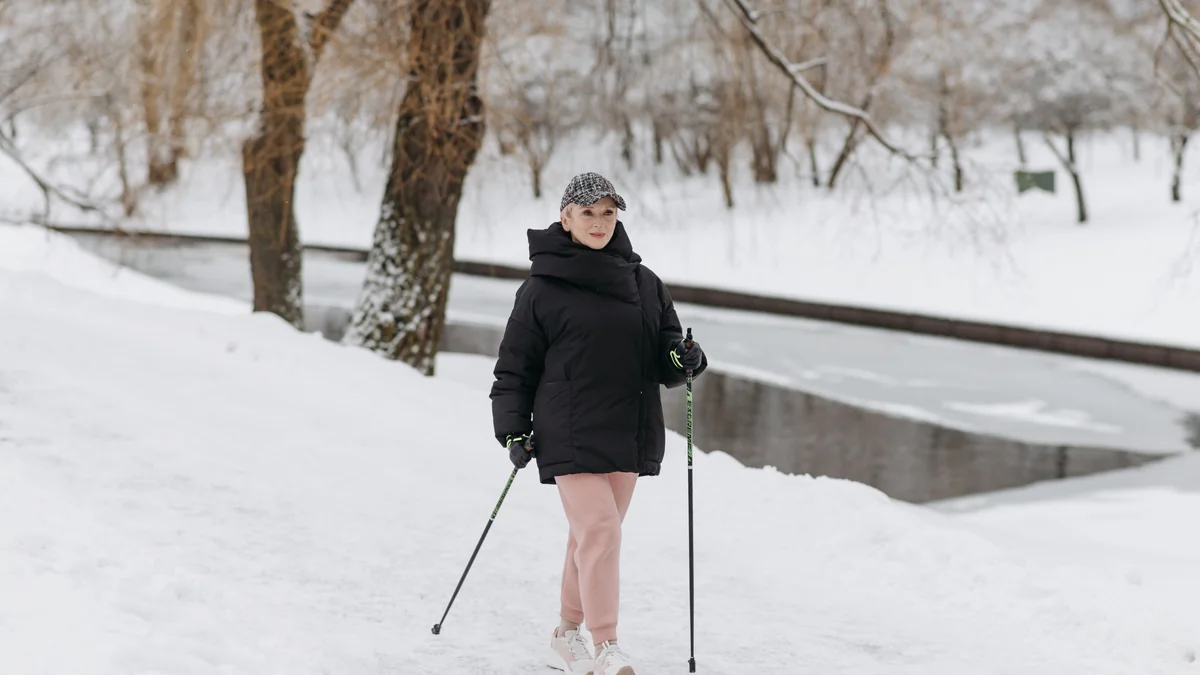
The AHA says there is no reason to take a break from physical activity when the temperature drops, but that a little preparation can keep you safe from hazards like hypothermia and frostbite. Its advice on clothing is to dress in layers, which trap air between the layers and form protective insulation. It also advises wearing a hat or head scarf, because heat can be lost through your head and ears are especially prone to frostbite, and keeping your hands and feet warm.
On what to wear first, the AHA says to resist the instinct to start layering with cotton. For the first layer, it suggests something that pulls moisture away from your skin, such as moisture-wicking fabrics, then a layer of fleece, topped with a thin waterproof layer.
When the weather keeps you inside, the AHA lists indoor options such as dancing, active housework like vacuuming and sweeping, mall walking, stair climbing, yoga or other group classes, or a home workout circuit. It also states its general physical activity recommendation: at least 150 minutes of moderate-intensity aerobic exercise per week.
The AHA asks you to consult your health care professional if you have a medical concern or question about exercising in cold weather, especially if it is a substantial increase over your usual physical activity level. For gentle ideas to build into the day, see our pages on light daily movement and gentle daily routines, and on muscle strength.
Other cold-season tips from the AHA
- Drink water. The AHA says that thirst isn’t the best indicator that you need to drink, even if you aren’t sweating as much.
- Watch the drinks. Comforting drinks like hot chocolate can be loaded with unwanted sugar and fat.
- Check medicines first. Cold weather is also associated with cold and flu season, but the AHA says to be careful about the cold medicines you take, especially if you have high blood pressure, and that it is best to check with your health care professional or pharmacist before taking any over-the-counter medications, supplements or substances.
- Learn CPR. The AHA says EMS response times can be slower in bad weather, and that Hands-Only CPR can double or triple a person’s chance of survival: call 911, then push hard and fast in the center of the chest.
When to call 911 / your doctor
Box: when to call 911 and when to talk to a doctor
Call 911 if you have heart attack warning signs, according to the AHA:
- Chest discomfort: most people having a heart attack feel it in the center of the chest. It can last more than a few minutes, or it may go away and then return, and it can feel like uncomfortable pressure, squeezing, fullness or pain.
- Discomfort in other areas of the upper body: one or both arms, back, neck, jaw or stomach.
- Shortness of breath, with or without chest discomfort.
- Other signs: breaking out in a cold sweat, nausea, rapid or irregular heartbeat, feeling unusually tired, feeling lightheaded.
The AHA adds that women may have other symptoms that are typically less associated with heart attack, such as anxiety, vomiting, upset stomach, pain in the shoulder, back or arm, and unusual tiredness and weakness.
Call 911 for stroke warning signs (B.E. F.A.S.T.): sudden loss of balance or coordination, sudden changes in vision, a drooping or numb face, an arm that is weak or numb or drifts downward, and slurred or hard-to-understand speech. The AHA says that if the person shows any of these symptoms, even if the symptoms go away, call 911 and get them to the hospital immediately.
If an adult suddenly collapses: the AHA says to call 911 and begin pushing hard and fast in the middle of the chest until help arrives.
If you are shoveling or exerting yourself and have chest pain or pressure, lightheadedness or heart palpitations, the AHA says to stop the activity immediately, and to call 911 if symptoms don’t subside shortly after you stop.
Even if you are not sure it is a heart attack, the AHA says to get it checked out: “Minutes matter!”
Talk to your doctor or health care professional about a medical concern or question regarding exercise in cold weather, before taking over-the-counter medications if you have high blood pressure, and before starting any exercise after a heart attack or stroke.
Frequently asked questions
Does cold weather raise the risk of a heart attack?
The AHA says the cold causes blood vessels to contract and coronary arteries to constrict, which can raise blood pressure and increase the risk of heart attack, stroke or even cardiac arrest.
Is shoveling snow dangerous?
The AHA says that for most people shoveling snow may not lead to any health problems, but that some people should avoid sudden exertion like lifting a heavy shovel full of snow, and that the strain is especially concerning for people with cardiovascular risks.
Why are older people at greater risk in the cold?
The AHA says elderly people may have lower subcutaneous fat and a diminished ability to sense temperature, so they can suffer hypothermia without knowing they are in danger.
What are the warning signs of a heart attack?
The AHA lists chest discomfort, discomfort in the arms, back, neck, jaw or stomach, shortness of breath, a cold sweat, nausea, a rapid or irregular heartbeat, unusual tiredness and lightheadedness, and says to call 911 if you have any heart attack warning signs.
Should I exercise in cold weather?
The AHA says there is no reason to take a break from physical activity when the temperature drops, and asks you to consult your health care professional if you have a medical concern or question about exercising in cold weather.
Sources
- American Heart Association, “Cold Weather and Cardiovascular Disease” (last reviewed January 11, 2024): https://www.heart.org/en/health-topics/consumer-healthcare/what-is-cardiovascular-disease/cold-weather-and-cardiovascular-disease
- American Heart Association, “How to Stay Active in Cold Weather” (last reviewed January 5, 2024): https://www.heart.org/en/healthy-living/exercise-and-physical-activity/getting-active/how-to-stay-active-in-cold-weather
- American Heart Association, “Warning Signs of a Heart Attack” (last reviewed December 12, 2024): https://www.heart.org/en/health-topics/heart-attack/warning-signs-of-a-heart-attack
- American Heart Association, “Heart Attack, Stroke and Cardiac Arrest Symptoms”: https://www.heart.org/en/about-us/heart-attack-and-stroke-symptoms
- American Heart Association newsroom (heart.org), “Hot tips for cold weather heart health” (published January 23, 2026): https://newsroom.heart.org/news/hot-tips-for-cold-weather-heart-health
- American Heart Association newsroom (heart.org), “Shoveling snow can be dangerous in extreme cold” (published February 5, 2026): https://newsroom.heart.org/local-news/shoveling-snow-can-be-dangerous-in-extreme-cold
Sources read on November 19, 2026. Medical information changes: check the current AHA pages and ask a health professional about your own situation.
Photo: Pavel Danilyuk / Pexels (Pexels License)