This article is for general information and does not replace advice from an eye doctor or other qualified health professional. It is not personal medical advice: only an eye exam can tell whether you have glaucoma.
Short answer: glaucoma is a group of eye diseases that can cause vision loss and blindness by damaging the optic nerve, according to the U.S. National Eye Institute (NEI). At first it usually has no symptoms, which is why, the NEI says, half of people with glaucoma don’t know they have it. Being over 60 is one of the risk factors it lists. The only way to find out is a comprehensive dilated eye exam, and early treatment can often stop the damage and protect your vision.
When to get help right away
The NEI explains that angle-closure glaucoma, a less common type, can cause sudden symptoms: intense eye pain, upset stomach (nausea), red eye and blurry vision. If you have any of these symptoms, the NEI says to go to your doctor or an emergency room now. If you cannot get there quickly, contact emergency services.
What glaucoma is
The NEI describes glaucoma as a group of eye diseases that damage the optic nerve, the nerve at the back of the eye. There are many types. The most common in the United States is open-angle glaucoma, which is what most people mean when they talk about glaucoma. Other types, such as angle-closure glaucoma and congenital glaucoma, are less common.
Glaucoma can affect one eye or both. The NEI is direct about two points: there’s no cure for glaucoma, and there’s no way to prevent it. But early treatment can often stop the damage and protect your vision. That is why finding it early matters so much.
Why it often goes unnoticed
At first, glaucoma usually has no symptoms. Over time, the NEI explains, you may slowly lose vision, usually starting with your side (peripheral) vision, especially the part closest to your nose. Because this happens so slowly, many people can’t tell at first that their vision is changing.
As the disease gets worse, you may notice that you can’t see things off to the side anymore. Without treatment, the NEI warns, glaucoma can eventually cause blindness. In its summary, the NEI lists the early symptoms as “often none” and the later ones as loss of side vision, blind spots and blindness.
Who is at higher risk
Anyone can get glaucoma, but the NEI says you are at higher risk if you:
- are over age 60, especially if you’re Hispanic/Latino;
- are African American and over age 40;
- have a family history of glaucoma.
The NEI’s advice is to talk with your doctor about your risk and ask how often you need to get checked. For people at higher risk, it recommends a comprehensive dilated eye exam every 1 to 2 years.
The role of eye pressure
Scientists aren’t sure what causes the most common types of glaucoma, the NEI says, but many people with glaucoma have high eye pressure, and treatments that lower eye pressure help to slow the disease.
Eye pressure is not the whole story, though. According to the NEI:
- some people with high eye pressure don’t get glaucoma;
- there is a type of glaucoma that happens in people with normal eye pressure;
- normal eye pressure varies by person: what’s normal for one person could be high for another.
In other words, a pressure reading on its own does not answer the question. The full eye exam does.
How an eye doctor checks for glaucoma
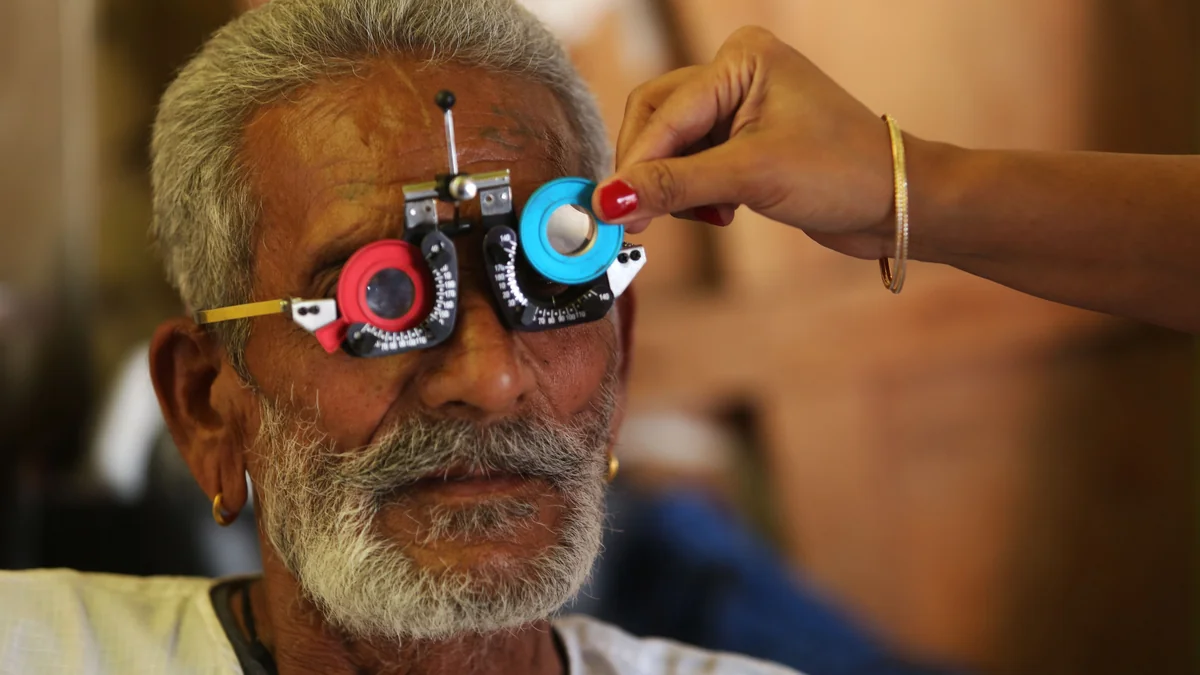
Eye doctors check for glaucoma as part of a comprehensive dilated eye exam. The NEI describes it as simple and painless: the doctor gives you eye drops to dilate (widen) your pupils, then checks your eyes for glaucoma and other eye problems. The exam includes a visual field test to check your side vision.
If you’re already seeing an eye doctor for another reason, such as dry eyes, it’s a good moment to ask about your glaucoma risk. Our guide to dry eyes as you get older covers that common condition, which the NEI also says can be checked during a dilated eye exam.
How glaucoma is treated
The NEI lists three main types of treatment, chosen by the doctor:
- Medicines: prescription eye drops are the most common treatment. They lower the pressure in the eye and help prevent damage to the optic nerve.
- Laser treatment: lasers can help fluid drain out of the eye to lower the pressure. The NEI describes it as a simple procedure done in the doctor’s office.
- Surgery: if medicines and laser treatment don’t work, the doctor might suggest one of several types of surgery that help fluid drain out of the eye.
The NEI is clear about what treatment can and can’t do: it won’t undo damage to your vision that has already happened, but it can stop it from getting worse. That is why, for someone diagnosed with glaucoma, the NEI says it’s important to start treatment right away.
Living with a glaucoma diagnosis
The NEI calls glaucoma a serious disease but says treatment works well. For people who have it, it suggests:
- if your doctor prescribes medicine, take it every day;
- tell your doctor if your treatment causes side effects;
- see your doctor for regular check-ups;
- if vision loss makes everyday activities harder, ask your doctor about vision rehabilitation services or devices that could help;
- encourage family members to get checked, since glaucoma can run in families.
These are general points, not a treatment plan: decisions about your own care belong with your eye doctor. For a wider look at the health checks that matter as you age, see our brain health hub, which includes a section on hearing and vision checks.
Frequently asked questions
What is glaucoma?
According to the NEI, glaucoma is a group of eye diseases that can cause vision loss and blindness by damaging the optic nerve at the back of the eye.
Does glaucoma have early symptoms?
Usually not. The NEI says glaucoma often has no early symptoms, and half of people with glaucoma don’t know they have it.
Am I at higher risk after 60?
Yes. The NEI lists being over 60 as a risk factor, especially for Hispanic/Latino people, along with being African American and over 40, or having a family history.
How often should I have my eyes checked for glaucoma?
The NEI suggests asking your doctor. For people at higher risk, it recommends a comprehensive dilated eye exam every 1 to 2 years.
Can glaucoma be cured or prevented?
The NEI says there’s no cure and no way to prevent it, but early treatment can often stop the damage and protect your vision.
When is glaucoma an emergency?
When sudden symptoms appear, such as intense eye pain, nausea, red eye and blurry vision. The NEI says to go to your doctor or an emergency room now.
Sources
- National Eye Institute (NIH), “Glaucoma” (last updated August 19, 2026): https://www.nei.nih.gov/eye-health-information/eye-conditions-and-diseases/glaucoma
- National Eye Institute (NIH), “Dry Eye” (last updated August 6, 2025): https://www.nei.nih.gov/eye-health-information/eye-conditions-and-diseases/dry-eye
Photo: Mike Sangma / Pexels (Pexels License)