This article is for general information and does not replace advice from a doctor or other qualified health professional. It is not personal medical advice, and only a health professional can say what is causing your tinnitus or what might help.
Short answer: tinnitus is the perception of a sound with no outside source, often described as ringing. According to the U.S. National Institute on Deafness and Other Communication Disorders (NIDCD), surveys estimate that 10 to 25% of adults have it, most people who have it have some degree of hearing loss, and it is only rarely associated with a serious medical problem. There is no cure, but there are ways to reduce symptoms. We read the NIDCD page (last updated May 1, 2023) and the UK National Health Service (NHS) page on November 22, 2026.
What tinnitus is
NIDCD defines tinnitus as the perception of sound that does not have an external source, so other people cannot hear it. It is commonly described as ringing, but some people hear roaring or buzzing. The NIDCD lists other sounds too: whistling, humming, clicking, hissing or squealing. The sound may be soft or loud, low or high pitched, and it may come and go or be present all the time.
Most cases are subjective, meaning that only you can hear the sounds. In rare cases, the sound pulsates rhythmically, often in time to your heartbeat. NIDCD notes that a doctor may then be able to hear it with a stethoscope.
How common is it, and does it go away?
NIDCD says surveys estimate that 10 to 25% of adults have tinnitus. It also says that, for children and adults, tinnitus may improve or even go away over time, but in some cases it worsens with time. When it lasts for three months or longer, it is considered chronic.
The page does not give figures specific to people over 60. It does say that hearing loss, which can be caused by factors such as aging or exposure to loud noise, is strongly associated with tinnitus. Some people with hearing loss, however, never develop tinnitus.
Common causes
NIDCD says the exact causes are not fully understood, and lists several links:
- Noise exposure, for example at work, at a sporting event or at a concert.
- Hearing loss, strongly associated with tinnitus.
- Medications. Tinnitus can be a side effect of certain medications, especially at high doses. NIDCD names non-steroidal anti-inflammatory drugs (ibuprofen, naproxen, aspirin), certain antibiotics, anti-cancer drugs, anti-malaria medications and antidepressants.
- Earwax or an ear infection, which can block the ear canal.
- Head or neck injuries.
Less common causes
NIDCD also lists Ménière’s disease, jaw joint problems (clenching or tooth grinding), tumor-related disorders such as a benign vestibular schwannoma, blood vessel problems (including high blood pressure and atherosclerosis) and chronic conditions such as diabetes, migraines, thyroid disorders, anemia, lupus and multiple sclerosis. It adds that some people develop tinnitus for no known reason. The NHS likewise says that it is not always clear what causes tinnitus.
When to see a doctor
NIDCD advises that if you have tinnitus, you should first see your primary care doctor, who will check for earwax or fluid from an ear infection and ask about your medical history, including medications. The NHS gives more detailed guidance for the UK:
- See a GP if you have tinnitus regularly or constantly, if it is getting worse, or if it is bothering you, for example affecting your sleep or concentration or making you feel anxious or depressed.
- Ask for an urgent GP appointment if you have tinnitus that beats in time with your pulse.
- Go to A&E or call 999 (UK emergency services) if you have tinnitus after a head injury, or tinnitus together with sudden hearing loss, weakness in the muscles of your face, or a spinning sensation (vertigo). In other countries, use your local emergency number.
This is general information from two public health bodies, not a way to decide for yourself whether your symptoms are serious. If you are worried, contact a health professional.
Who you might see
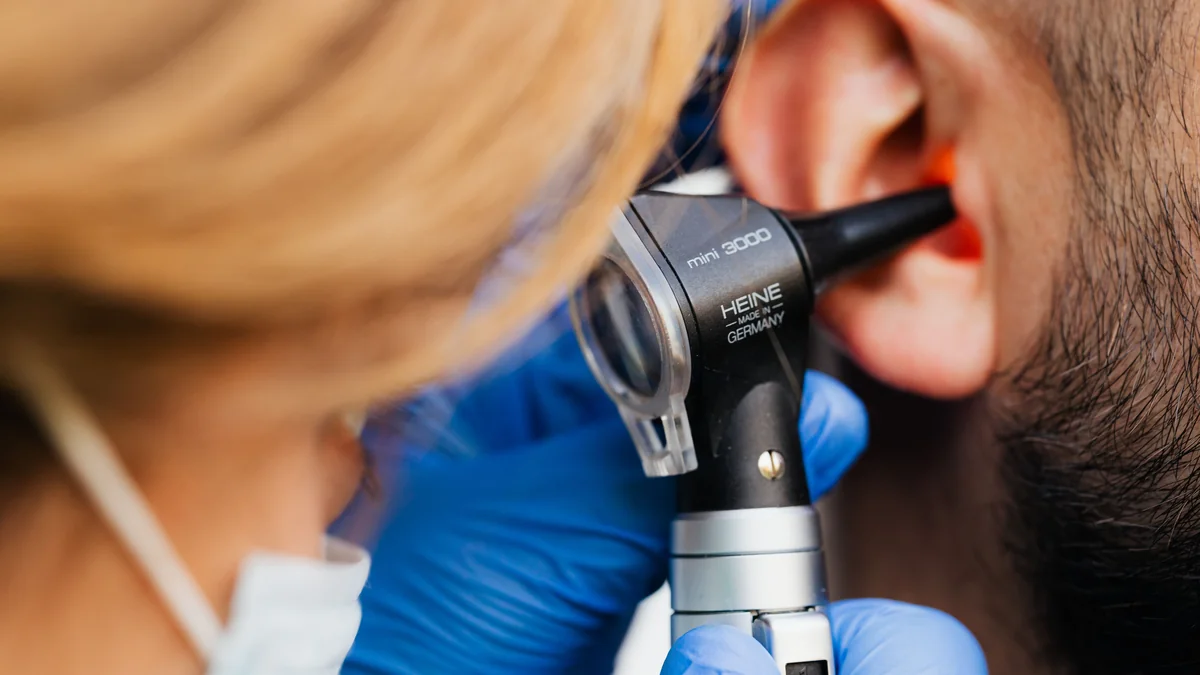
After the primary care visit, NIDCD says you may be referred to an otolaryngologist (an ear, nose and throat doctor, or ENT), who will ask about the sounds and when they started and examine your head, neck and ears. You might also see an audiologist, who can measure your hearing and evaluate your tinnitus. The ENT may order imaging tests, especially if the tinnitus pulsates.
What can help, according to NIDCD
When tinnitus has an underlying physiological cause, such as earwax or jaw joint problems, NIDCD says addressing the cause can eliminate or greatly reduce symptoms. For many people, symptoms can persist for months or even years, and several approaches can lessen the impact:
- Sound therapy. Tabletop or smartphone sound generators are typically used as an aid for relaxation or sleep. Hearing aids are one of the main treatment options for people with tinnitus who have hearing loss.
- Behavioral therapy. Counseling can help reduce the impact of tinnitus on your life. Cognitive behavioral therapy teaches you to identify negative thoughts that cause distress, and NIDCD says studies have shown it can help improve well-being. Tinnitus retraining therapy combines counseling and sound therapy.
- Medications. There are no medications specifically for treating tinnitus, but a doctor may prescribe antidepressants or anti-anxiety medications to improve mood or sleep.
The NHS adds everyday suggestions: relaxing, working on sleep habits such as a bedtime routine, avoiding things that can make tinnitus worse (stress or loud background noise), and not having total silence, since soft music or sounds may distract you. It also says that hobbies and activities may take your mind off it. For related pages on this site, see hearing and other health checks, sleep and the rhythm of the day and hobbies to start at any age.
Supplements: what NIDCD says
NIDCD says that while certain vitamins, herbal extracts and dietary supplements are commonly advertised as cures for tinnitus, “none of these has been proven to be effective”. Talk to a health professional before taking any product for tinnitus.
Frequently asked questions
What is tinnitus?
According to NIDCD, it is the perception of sound that does not have an external source, so other people cannot hear it. It is commonly described as ringing, but can also be roaring, buzzing or other sounds.
Is tinnitus common after 60?
NIDCD says surveys estimate that 10 to 25% of adults have tinnitus and that hearing loss, which can be caused by aging, is strongly associated with it. The page gives no figure specific to people over 60.
Does tinnitus mean something serious?
NIDCD says tinnitus is only rarely associated with a serious medical problem and is usually not severe enough to interfere with daily life. The NHS lists situations that need urgent or emergency care, described above.
Can tinnitus be cured?
NIDCD says there is currently no cure for tinnitus, but there are ways to reduce symptoms, such as sound therapy devices (including hearing aids), behavioral therapies and medications.
Do supplements help tinnitus?
NIDCD says none of the vitamins, herbal extracts or dietary supplements commonly advertised as cures has been proven to be effective.
Who should I see first about tinnitus?
NIDCD advises seeing your primary care doctor first, who may refer you to an ENT doctor or an audiologist.
Sources
- National Institute on Deafness and Other Communication Disorders (NIDCD), “What Is Tinnitus? — Causes and Treatment” (publication no. 10-4896, February 2023; last updated May 1, 2023), read on November 22, 2026: https://www.nidcd.nih.gov/health/tinnitus
- NHS (United Kingdom), “Tinnitus” (no review date shown on the text we read), read on November 22, 2026: https://www.nhs.uk/conditions/tinnitus/
Sources read on November 22, 2026. Check the current NIDCD and NHS pages and ask a health professional about your own situation.
Photo: kaboompics / Pexels (Pexels License)