Author: The Aging Effect editorial team
Editorial review: Claims and sources checked on 18 November 2026 (Europe/Paris) against the official pages and papers listed below. No named clinician is claimed as a reviewer.
Last reviewed: 18 November 2026
This article is for general information and does not replace advice from a doctor or other qualified health professional. It cannot tell you which sport is safe for your bones, and it is not a training plan. If you have low bone density, osteoporosis, a heart or metabolic condition, or you are unused to vigorous activity, talk with a health professional before changing how you exercise.
Short answer: a 2026 systematic review of 24 randomized trials in healthy adults found that high-intensity training was linked to a statistically significant rise in osteocalcin, a blood marker of bone formation. Walking-type endurance work and power (resistance) training, taken as pooled groups, did not show a significant change in that same marker. Pooled bone mineral density did not change significantly. Those results describe blood markers in people without diagnosed bone disease. They do not prove that two team sports will make bones stronger, cut fracture risk, or replace current exercise guidance.
What the review set out to measure
The paper, by Barna and colleagues, was published on 2 June 2026 in Sports Medicine – Open. It is a systematic review and meta-analysis, registered in PROSPERO (CRD42023483811). The authors write: “We aimed to quantify the effects of systematic training on bone remodeling biomarkers, particularly osteocalcin and bone alkaline phosphatase in healthy adult populations.”
Only randomized controlled trials were included. Training had to last more than two weeks and was compared with a group that did not follow a systematic training program. The authors state: “Eligible studies included healthy adults (≥ 18 years).” They also write: “We included participants without any comorbidities, medication or supplementation.” After screening 16,434 records, they analyzed 24 studies with 1,238 participants.
That last point matters for anyone reading headlines about osteoporosis. The pooled analysis is not a study of people already living with osteoporosis or osteopenia.
What “high intensity” meant here
The statistically significant osteocalcin finding comes from a high-intensity endurance subgroup, not from every sport in the review. The authors classified sessions as high-intensity when the continuous load stayed above 85% of maximum heart rate. Sessions lasted 50 to 60 minutes, one to three times a week. Exercise types in that subgroup were recreational team handball, recreational football (soccer), and, in one trial, high-intensity interval work on a stationary bike. Six articles and 193 participants were included.
The paper reports: “High-intensity training significantly increased osteocalcin levels (MD = 6.88; 95% CI 0.37 to 13.38).” The I² value given for that subgroup is 80%, which means the trials were quite heterogeneous. The abstract adds: “GRADEpro assessment for osteocalcin in the high-intensity training group revealed moderate to low certainty.”
The unit of the mean difference is not stated in the abstract or in the text of the article. We therefore report the figure as the authors published it, without converting it into a percentage.
The 45 to 46 percent figure comes from one small trial
Some reports of this review mention a 45 to 46 percent rise in substances linked to bone formation. That percentage is not the pooled result of the 24 trials.
It comes from a 2014 randomized trial by Helge and colleagues, one of the studies later included in the high-intensity group. The trial is described as follows: “Twenty-six healthy sedentary men (age 68.2 ± 3.2 years) were randomized into three groups: football (F; n = 9) and resistance training (R; n = 9), completing 45-60 min training two to three times weekly, and inactive controls (C; n = 8).” After the first session allocations, the football arm had nine men.
The abstract reports: “After 4 and 12 months of football, OC was 45% and 46% higher (P < 0.001), and P1NP was 41% and 40% higher (P < 0.001) than at baseline, respectively.” P1NP is another formation marker. A resorption marker also moved: “After 12 months, CTX-1 showed a main effect of 43% (P < 0.05).” In the same trial, proximal-femur bone mineral density in the football group “increased up to 1.8% (P < 0.05) from 0 to 4 months and up to 5.4% (P < 0.001) from 0 to 12 months; WB-BMD remained unchanged.” Whole-body density did not change. “In R and C, BMD and BTM remained unchanged.”
A rise of 45 to 46 percent in one arm of nine men is a real finding from that trial. It is not a summary of all 24 studies, and it is not a percentage that can be read off the pooled mean difference of 6.88.
What walking, mixed training and resistance work showed in the pool
Endurance training as a whole (14 studies, 607 participants) did not show a significant effect on osteocalcin. The mean difference was 2.24, with a 95% confidence interval from −0.72 to 5.21, and I² = 82%. The moderate-to-high intensity endurance subgroup (75 to 85% of maximum heart rate; 6 studies, 246 people) was also non-significant (MD −0.06; 95% CI −1.24 to 1.12; I² = 80%). The low-intensity endurance subgroup (under 70% of maximum heart rate; 2 studies, 182 people) was likewise non-significant (MD −1.23; 95% CI −11.51 to 9.04; I² = 80%).
Power training, which covers resistance-type work in this paper, was also non-significant for osteocalcin (5 studies, 131 participants; MD 3.05; 95% CI −0.72 to 6.81; I² = 61%). Mixed endurance-plus-power programs (3 studies, 127 participants) were non-significant (MD 0.9; 95% CI −3.28 to 5.08; I² = 6%). Bone alkaline phosphatase after endurance training did not change significantly (5 studies, 208 participants; MD 0.34; 95% CI −0.39 to 1.06; I² = 65%).
A non-significant pooled result is not the same as proof that walking or resistance training has no value. It means that, in this particular set of trials and for these blood markers, the combined estimate did not cross the threshold of statistical significance. The review did not run a single head-to-head ranking of football versus walking versus the gym.
Bone density did not rise in the pooled analysis
The abstract is unambiguous: “Bone Mineral Density showed no significant changes after endurance or power training.” In the high-intensity bone-density subgroup, four studies and 76 participants produced a mean difference of 0.00 (95% CI −0.12 to 0.11; I² = 33%). A high-frequency density subgroup (2 studies, 119 people) also produced a mean difference of 0.00 (95% CI −0.12 to 0.12; I² = 0%).
The authors list among their limitations “small sample sizes, lack of long-term data on bone mineral density, heterogeneity of studies.” They also note: “Osteocalcin and bone-alkaline phosphatase are valuable markers of bone remodeling, but do not fully describe the complexity of the whole bone remodeling process.” The review does not report fracture outcomes.
A higher osteocalcin reading is therefore not, by itself, evidence that bones have become stronger or that fractures will be less likely. In the Helge trial, a resorption marker rose as well as formation markers. Remodeling is a two-sided process.
How this sits with existing exercise guidance
U.S. federal guidance has not been rewritten by this single review. The National Institute of Arthritis and Musculoskeletal and Skin Diseases (NIAMS) still states that “A combination of these types of exercise is best for building and maintaining healthy bones and preventing falls and fractures.” That combination includes weight-bearing work — NIAMS lists “Brisk walking (3 to 4 miles per hour)” among the examples — plus resistance training and balance training.
NIAMS also writes, for all adults, that they should aim for “At least 150 minutes (2.5 hours) a week of moderate-intensity exercise OR at least 75 minutes a week of vigorous-intensity exercise”, with muscle-strengthening activity at least twice a week. For older adults, those 150 minutes “should include a mix of balance training, aerobic, and muscle-strengthening exercises every week.”
Our Joints hub and Muscle strength hub gather everyday movement ideas in that spirit, and our guide to morning joint stiffness looks at gentle starts to the day. None of those pages is a prescription, and neither is this article.
If you already have low bone density or osteoporosis
The people in the meta-analysis were enrolled as healthy adults. That is a different population from people with a diagnosis of osteopenia or osteoporosis.
NIAMS is direct: “If you have low bone density (a condition sometimes called osteopenia), osteoporosis, or other physical limitations, talk to a health care provider before starting an exercise program.” On its osteoporosis treatment page it adds: “Although exercise is beneficial for people with osteoporosis, it should not put any sudden or excessive strain on your bones. If you have osteoporosis, you should avoid high-impact exercise.” And: “If you have osteoporosis or bone loss, it is important to talk to your doctor or physical therapist before beginning any exercise program.”
Recreational football and handball involve cutting, jumping and contact. They can be enjoyable for some people who already play and have been cleared to do so. They are not a default recommendation, and this review does not make them one.
A university press note about the paper, issued by Semmelweis University on 3 August 2026, also warned that people should not start a high-intensity program suddenly, especially those with cardiovascular, musculoskeletal or metabolic disease, or osteoporosis.
What this review can — and cannot — tell you
In short, the 2026 analysis links training above 85% of maximum heart rate to a rise in osteocalcin in healthy adults, with high heterogeneity and moderate-to-low certainty. It does not show a pooled gain in bone mineral density, does not measure fractures, and does not study people with osteoporosis. The 45 to 46 percent figures often repeated around the paper come from one small trial of recreational football in older men, not from the 24-study pool.
Walking, strength work and balance practice remain part of official guidance for bone health and fall prevention. If you are considering a more vigorous sport, the cautious next step is a conversation with a clinician who knows your history, not a sudden change of routine.
Frequently asked questions
Does high-intensity exercise strengthen bones?
A 2026 review found that high-intensity training raised osteocalcin, a formation marker, in healthy adults. Pooled bone mineral density did not change significantly, and fractures were not studied. A marker change is not the same as proven stronger bones.
Are walking and weight training enough for bone health?
In this review, pooled walking-type endurance work and power training did not significantly change osteocalcin. That is not proof they have no value. NIAMS still recommends a mix of weight-bearing exercise (including brisk walking), resistance training and balance work.
What did the 2026 review on osteocalcin and exercise find?
Barna and colleagues analyzed 24 randomized trials and 1,238 healthy adults. High-intensity training (above 85% of maximum heart rate) was linked to a mean osteocalcin difference of 6.88 (95% CI 0.37 to 13.38), with moderate-to-low certainty. Other training groups were not statistically significant for that marker.
Should people with osteoporosis play football or handball?
This review did not study people with osteoporosis. NIAMS says that if you have osteoporosis, you should avoid high-impact exercise and talk to a doctor or physical therapist before beginning any exercise program. This article is not a recommendation to take up those sports.
Is a rise in osteocalcin the same as stronger bones?
No. The authors note that osteocalcin and bone alkaline phosphatase do not fully describe bone remodeling. The pooled density analyses were not significant, and the review did not report fracture outcomes.
Sources
- Barna V, Makolli A, Pásztorné Benyó Z, et al. “High-Intensity Training Increases Osteocalcin Levels: A Meta-Analysis of Effects of Exercise on Bone Remodeling biomarkers.” Sports Medicine – Open. Published 2 June 2026. DOI: 10.1186/s40798-026-00986-2. Open access: https://link.springer.com/article/10.1186/s40798-026-00986-2 (opened 18/11/2026)
- Helge EW, et al. “Recreational football improves bone mineral density and bone turnover marker profile in elderly men.” Scandinavian Journal of Medicine & Science in Sports. 2014;24:98–104. PMID: 24903207 (opened 18/11/2026)
- National Institute of Arthritis and Musculoskeletal and Skin Diseases (NIAMS), “Exercise for Your Bone Health”: https://www.niams.nih.gov/health-topics/exercise-your-bone-health (May 2023; opened 18/11/2026)
- NIAMS, “Osteoporosis: Diagnosis, Treatment, and Steps to Take”: https://www.niams.nih.gov/health-topics/osteoporosis/diagnosis-treatment-and-steps-to-take (opened 18/11/2026)
- Semmelweis University, press release, 3 August 2026, “Walking and weight training alone are not enough for strong bones – football and handball may be more effective”: https://semmelweis.hu/english/2026/08/walking-and-weight-training-alone-are-not-enough-for-strong-bones-football-and-handball-may-be-more-effective/ (opened 18/11/2026; secondary source, not a trial)
Sources opened on 18 November 2026 (Europe/Paris). No product or exercise program has been tested by The Aging Effect.
Related: Joints hub · Muscle strength hub · Morning joint stiffness
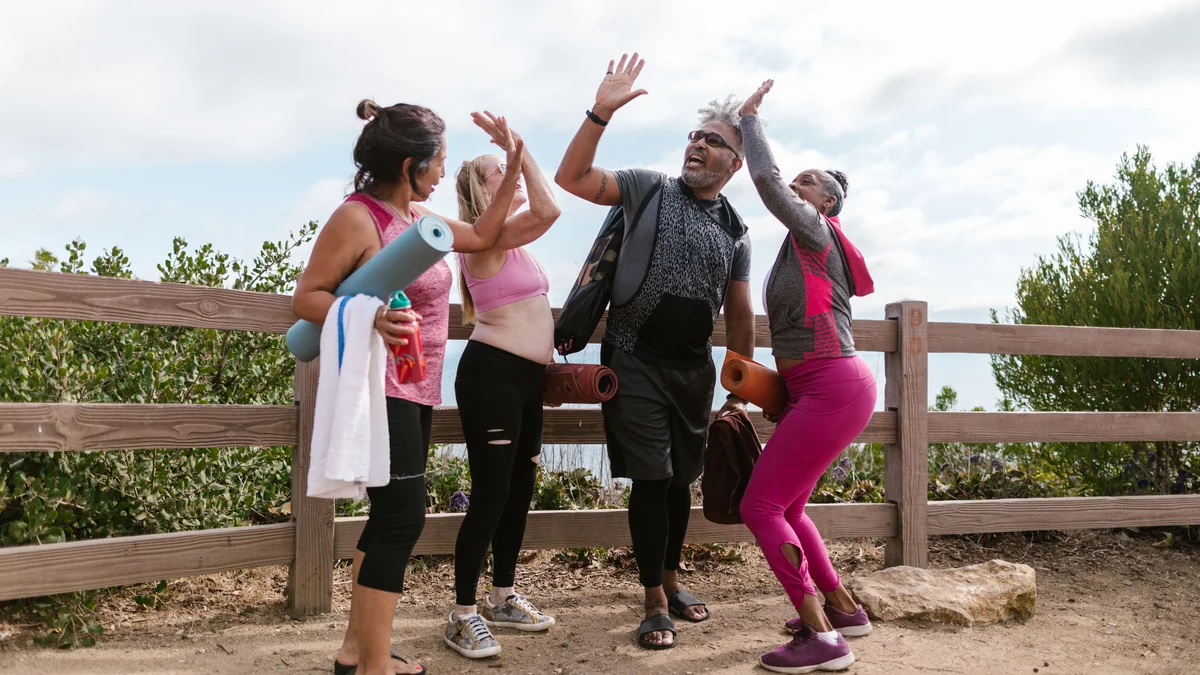
Photo: RDNE Stock project / Pexels (Pexels License)